

Addressing Florida’s Ban on Bans
This blog post was written by Aska Burks, a 2026 Marine Plastics Ambassador.
My policy campaign focused on Florida’s ban on plastic bans to appeal the 2008 preemption law, which prohibited local governments from regulating, taxing, or banning auxiliary containers, disposable plastic bags, or wrappings in any way. This law is contested throughout the state with some cities implementing restrictions outside the realm of the law, like banning plastic straws on city property. There had been multiple attempts to appeal this law, or reform it in some way.
This issue is important to my Florida panhandle community because I live just off the Gulf of Mexico in an elderly community. There’s little in forms of connections or outreach here, despite there being a lot of similar education and outreach on this topic in southern Florida. I wanted to offer outreach in the panhandle, specifically more information because the moment I learned about the problems with our environment I knew I wanted to help in some way but not everyone knows. It’s best to assume ignorance over malice because you can teach the ignorant. Which aligns with the Marine Plastics Ambassador program because EarthEcho’s big focus is education youth.
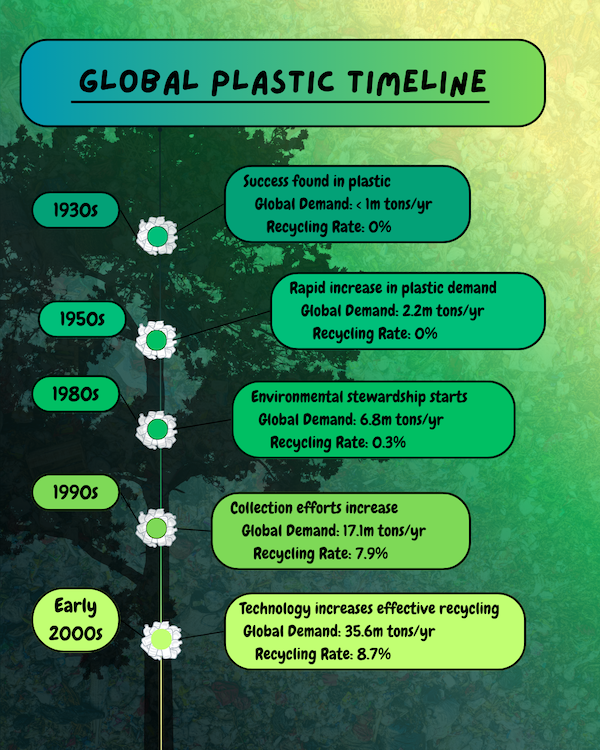
Campaign Summary & Impact
I began my campaign by researching the effects of this preemption law in Florida and what outreach there is near me, which there is very little. I set up a petition and shared it with my family, friends and other Marine Plastics Ambassadors to get the base signatures. From there, I set up my Instagram account (@Manatea_News) where I shared both climate action information related to plastic, and my petition. I focused on reaching out to small local groups to offer information, and currently have plans to make short educational videos to share with these groups..

By the end of the program, my campaign was on the smaller side of things with plans to continue expanding. I reached around 400 people with my petition, and more through my Instagram account. Thanks to this, I was able to get 50 local signatures on my petition. A small number, but in my mind that is 50 more people that know about the issue and care enough to take action. Any amount is better than no amount.

This summer, I attended EarthEcho’s Hill Day in Washington, D.C. and used it to continue to educate federal lawmakers about Florida’s preemption law and its damaging effects to Florida. Afterwards, a group of Florida Ambassadors and I did our own small online advocacy workshop that got an engagement of around 11 youth from across the state and then hosted a few meetings with state lawmakers to share our concerns.
Read more about Aska’s time in Washington, D.C. here!
Growth Through Ocean Advocacy
My best success as a Marine Plastics Ambassador likely was the advocacy workshop I helped lead with the other Florida Ambassador. This workshop allowed us to connect with a local advocacy group and other Florida youth to spread more information about plastic pollution and policy solutions. I also had a few challenges during this time as well, both academically and personally. A major set-back was my hometown being hit by Hurricane Isaias, leading to delays in my work as my community recovered.
However, I think my biggest take-away from this campaign is personal growth. I have developed the ability to be confident in my own information, and to have polite, but formal communication with both legislation and peers that may not have the same views as me. I have figured out how to effectively do social media outreach for advocacy, as I had little involvement with social media outside of the Marine Plastics Ambassador program. This program taught me how important social media is to advocacy, it allows for the spread of information not just throughout your community but throughout anyone who sees it. It all comes down to you being well informed, as well as appearing to be a trusting source. If the people you reach out to trust that you know what you’re talking about, then the outreach will go farther. The best way to do that was to develop tangible work such as petitions, events, and articles.
From here on, I want to double my petition numbers, and to continue my Instagram (@Manatea_News), where you can find all information related to my work. As an example of my future work, I’m currently planning to help with the work for the next bill to appeal Florida’s preemption law. I’m also working on a personal article related to marine plastic issues in Florida with in-field testing for both drinking water and the nearby Gulf. I plan to hold another advocacy workshop on a yearly basis to help connect local youth with legislation. I am also staying open to helping all my fellow Marine Plastic Ambassadors with any work they have in the future.
Take Action! Sign Aska’s petition to reduce plastic use and follow @Manatea_News on Instagram.
Learn more about the EarthEcho Marine Plastics Ambassadors at https://www.earthecho.org/plastics-ambassadors.