

Encouraging Sustainability in Competition Based Robotics
This blog post was written by Lillian Williams, a 2026 Marine Plastics Ambassador.
Many robotics teams use 3D printers with plastic filament for quick prototyping and easy mechanical turnarounds, but this results in quick mechanical turnover, multiple iterations of the same part, and complete rebuilds from season to season. Custom parts quickly become plastic waste that cannot be re-used or repurposed, ending up entirely in landfills. Thousands of dollars that the state spends on robotics in public schools (such as in North Carolina public schools) could be directed toward more cost-effective and sustainable practices. To create the next engineering workforce responsibly, this project aligns directly with the Marine Plastics Ambassador Program by tackling institutional plastic waste at its source and incentivizing sustainable engineering practices.

I met with Chris Rake who is C.O.O. of FIRST Robotics (international robotics competition), unfortunately my conversation ended up landing me nowhere, similar outcome with the C.E.O. of Betabox.I am still searching for robotics professionals who would be interested in collaborating with me.
My greatest success was identifying and bringing attention to a niche yet high-impact source of plastic waste: 3D printing filament in competitive robotics programs. I successfully researched the systemic nature of this issue and designed a targeted policy concept for an eco-engineering grant to incentivize recyclable materials. Additionally, taking the initiative to pitch directly to high-level leadership demonstrated the seriousness and relevance of the campaign. A major challenge was navigating resistance and dead ends when engaging with major industry leadership. I secured and conducted meetings with Chris Rake, Chief Operating Officer of FIRST Robotics, as well as the CEO of Betabox. Unfortunately, these early conversations did not lead to immediate partnerships or institutional changes. Rather than letting these setbacks derail the effort, I adapted my strategy by continuing to search for alternative robotics professionals, local engineering mentors, and educators who are passionate about sustainable practices and willing to collaborate. Ultimately though, I learned how to stay committed to a policy campaign even when high-level outreach yields disappointing results, developing resilience as an advocate.
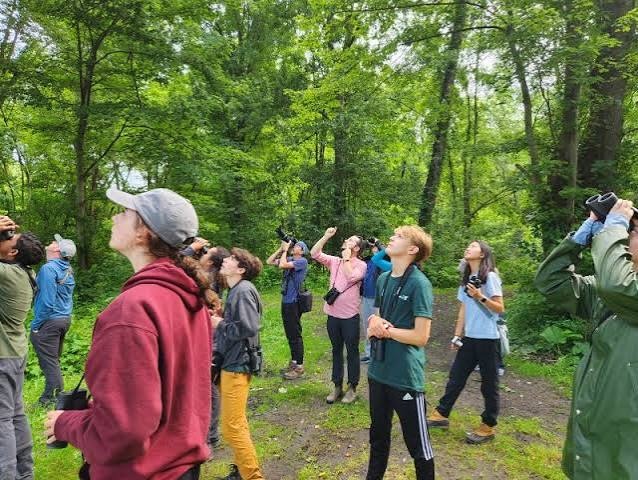
I hope to continue to develop this campaign with time, but for now, my main focus will be my EarthEcho OurEcho Challenge Project MicroBirder. I led plastic campaigns via MicroBirder, we had a Jordan Lake cleanup with NCSSM Outdoors Club and the Seaforth EnviroHawks for the GenSea Stormwater Stewardship Challenge.
Learn more about the EarthEcho Marine Plastics Ambassadors at https://www.earthecho.org/plastics-ambassadors.