

Plastic Pellet Resolution
This blog post was written by Ashley Du, a 2026 Marine Plastics Ambassador.
As an EarthEcho Marine Plastics Ambassador and co-founder of Refuse and Reuse, I have always enjoyed spending time with my friends on the beach and exploring different botanical gardens. When I came across plastic nurdles during a beach cleanup with my school club, The Loop, I started researching these small toxic particles.

Plastic pellets, also called nurdles, are tiny pieces of plastic used as raw material in manufacturing plastic products. They can spill into waterways and oceans during transportation and production. Because most of my previous work focused on reducing single-use plastics on school campuses, I wanted to address plastic pollution at its source. My policy campaign, Plastic Pellet Resolution, advocates for a California state resolution addressing plastic pellet pollution and stronger prevention methods.
With a fellow Water Challenge Ambassador, we began researching plastic pellets. We worked to develop our first draft of a proposed plastic pellet resolution, bringing attention to these issues. We reached out to other ambassadors and Napa Schools for Climate Action who had youth who passed similar resolutions through their local government. Through multiple revisions of our resolution, we distributed our petition via social media, messages, and flyers to people around the country. We were finally able to acquire 1,000+ petition signatures in support of our resolution. We also reached out to local organizations in Pasadena, schools, and neighborhoods that would be willing to support us. We eventually had 7+ supporting organizations.
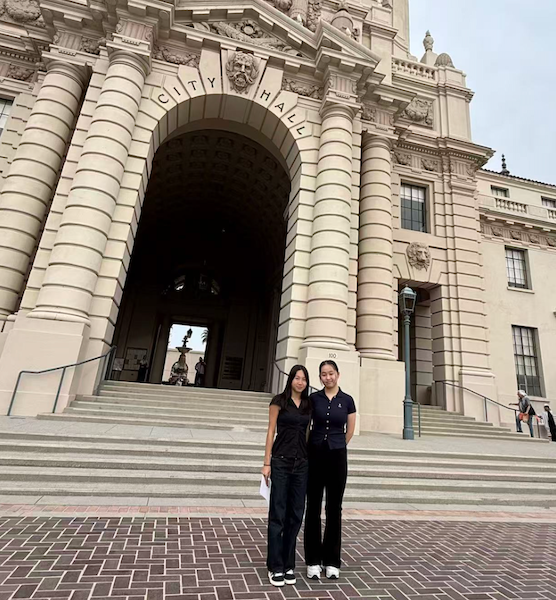
We presented our resolution to the Pasadena City Council through multiple public comments and meetings with the Environmental Advisory Commission and the waste committee. We also presented our resolution to the San Marino City Council, met with individual council members, and met with the education board. After each meeting with officials, we revised and edited our resolution. We also created an environmental education toolkit in hopes of bringing this to the education board. With limited interest in further engaging with our proposal, we were redirected to a state-level resolution with the support of the San Marino City Council.
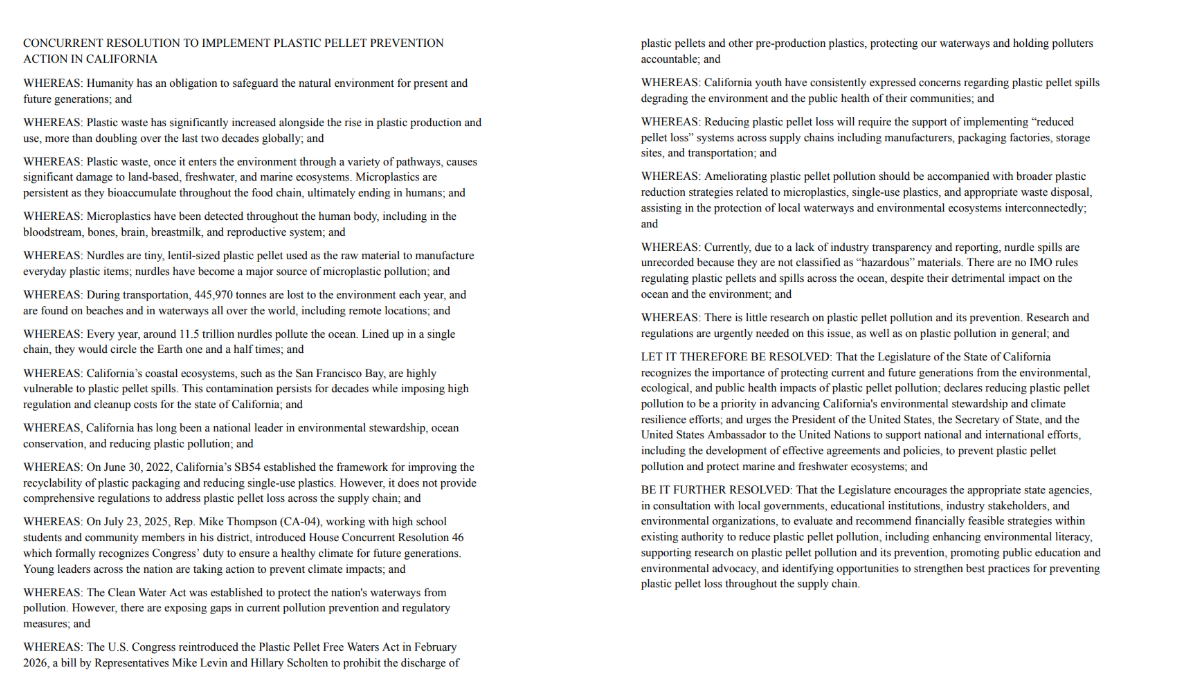
We met with California State Senator Sasha Renée Pérez’s staff to advocate for our resolution. In the end, we redirected to creating a concurrent plastic pellet resolution and submitted it to Senator Pérez’s legislative counsel. In October 2026, it was drafted into formal language. We are continuing to coordinate with Senator Pérez’s office, which plans to present our concurrent resolution to Senator Pérez for consideration this December as she reviews legislative proposals for the upcoming session.
Campaign Impact
- Petition signatures collected: 1100+ online petition signatures on Change.org
- People reached: 2000+
- Meetings with legislators or decision-makers: 10+
- Letters or emails sent: 50+
- Partnerships developed: 7
- Designed environmental education toolkit submitted for San Marino Education Board
- California State Assembly Certificate of Recognition for Plastic Pellet Advocacy & Leadership
I really enjoyed my time as a Marine Plastics Ambassador, where I got to meet a group of inspiring ambassadors who are always open to supporting each other. This is also my first time working on drafting a resolution and lobbying officials. I have learned a lot, and I know my work doesn’t stop here. I have become more confident in communicating with government officials, and learned how to reflect and redirect when faced with obstacles, such as controversial wording in the resolution and concerns from council members.
I plan to continue my policy campaign after the program and protect the waterway of my local community. I will continue following up and communicating with Senator Pérez’s staff. Hopefully, I wish to get the Concurrent Plastic Pellet Resolution passed into law. If you’re interested in supporting the campaign, please sign the following petition: https://www.change.org/p/recognize-plastic-pellet-pollution-problem
Learn more about the EarthEcho Marine Plastics Ambassadors at https://www.earthecho.org/plastics-ambassadors.