

Local Freedom, Less Plastic
This blog post was written by Bleakley Shettle, a 2026 Marine Plastics Ambassador.
Plastic pollution is an issue all over the world, but Florida’s proximity to the Gulf of Mexico and the Atlantic Ocean make it especially impactful towards the overall effect on our marine ecosystems. Plastic is dangerous for marine life because it does not biodegrade; it breaks down into toxic fragments that can physically trap/harm creatures or spread chemical pollutants along the food chain. While my town is not near the ocean, there are many rivers and lakes here. Often, I see plastic items floating in lakes and rivers and strewn about in local parks. Not only does this make parks and water sources look less desirable, affecting the tourism industry, it also harms the wildlife there.
If cities were able to restrict plastic use, they could greatly reduce the amount of plastic that goes into the oceans and other marine ecosystems. Through advocacy and citizen education, my campaign aimed to give cities in Florida the right to restrict plastic; increasing local freedoms and reducing plastic use.
My policy campaign, Local Freedom, Less Plastic, aimed to reintroduce House Bill 6023 to the Florida Legislature. If passed, this bill would repeal house bill 575; a preemptive law regulating local plastic restrictions across the state of Florida, otherwise known as the “ban on bans.” If the bill were to be repealed, districts of Florida would have the power to restrict plastics or other single-use items as they see fit.
Using Film to Inspire Action
My campaign was focused on educating people in my community about the harm that plastic pollution causes on marine ecosystems; and then engaging fellow youth in action through science labs and letter writing activities. I partnered with local businesses and schools in my district to bring my campaign to life by screening a short film I created about plastic pollution, starting a Green Club in my high school, and leading experiments and workshops for younger students.
My film was titled “Disposable,” and told the story of a plastic cup, from its use at a coffee shop to the park and, eventually, to the landfill. My goal was to use comedy and personification of the cup itself to give insight to what actually happens to plastic items after we are done with them. “Disposable,” which can be watched on YouTube, was screened at a local film festival, and won third place and raised $100 for my campaign!
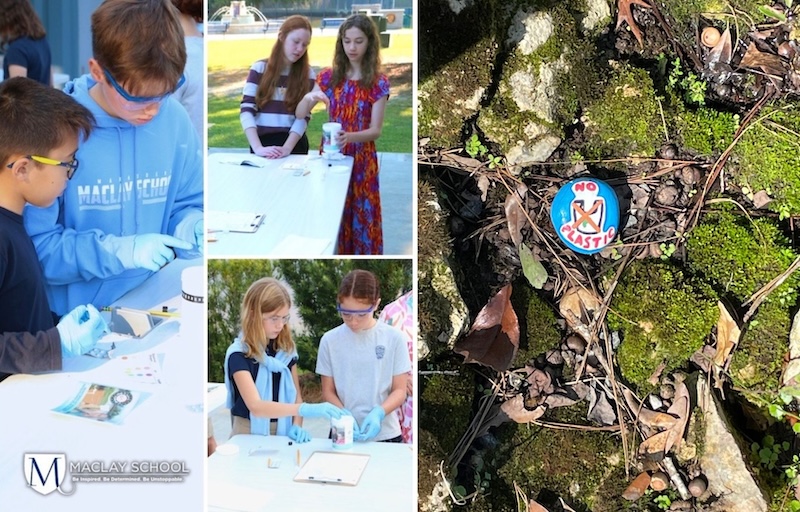
I started a Green Club in my high school, which hosted events to raise awareness. We worked with middle school students on a lab measuring the water quality of local lakes and hosted a letter writing workshop to send letters to our district representative concerning HB6023.
I also hosted a water quality lab with middle students, testing the quality of water from lakes in our area. The rock below was painted by a middle/high school student at Maclay School as part of an event hosted by the Green Club. The rock was later hidden at a park in my city for people to see.
Campaign Impact
- 300+ people attended events
- 100 people took direct action
- 150+ people engaged through social media
- 25 letters sent to Allison Tant, our district’s representative
- 50 rocks hidden in local parks with to spread plastic pollution awareness
- Partnerships with Red Eye Coffee, the Frother’s Daughter, Maclay High School and Middle School
My biggest success as a Marine Plastics Ambassador was creating my short film and being able to share it with my community. I had created films before, but this was the first one that I made with a clear purpose in mind. I found it really rewarding to be able to share my work with people in my town because I was able to share art with my community while simultaneously educating them about plastic pollution.
One of the main challenges I faced was balancing other work with time spent working on my campaign. I had to postpone a few of the events that I had planned on hosting because there wasn’t enough time in my schedule for them. I learned that I don’t have to pursue every idea I have for a successful campaign; it is better to be realistic with the constraints that I do have rather than overplan and not meet my goals. Throughout the course of my campaign, I developed communication and leadership skills through working with students and sharing my film.
Looking Ahead
In the following months, I plan to continue my work through meeting with legislators. The letter writing workshop that I hosted was the first step towards engaging with said legislators, but I want to take it a step further by actually meeting with some of them; I plan to meet with my district representative, Allison Tant (or her staff) sometime over the next few months. After my campaign ends, I will have more time to dedicate to other projects, like a magazine I am working on starting. Called “Cicada Season” the magazine will feature artwork and writing relating to nature from people in my community, with the goal of showing people how valuable the environment is and why it is important to protect. Find more information on Instagram @CicadaSeason_Mag.
Learn more about the EarthEcho Marine Plastics Ambassadors at https://www.earthecho.org/plastics-ambassadors.