

Closing the Loop SB1180: From Marine Science to Plastic Policy
This blog post was written by Erika Mascota, a 2026 Marine Plastics Ambassador.
As a marine scientist, I have spent much of my education learning about the connections between human activity and the health of marine and coastal ecosystems. Plastic pollution is an issue that continues to stand out to me because of how persistent it is and how far its impacts can extend beyond what we see on the surface. Plastic can enter our waterways, reach the ocean, break down into smaller particles, and become part of larger environmental and community health concerns.
At the same time, plastic pollution is not experienced equally by every community. Growing up and living in lower-income Black and Brown communities across California, I have seen how environmental issues can intersect with the communities people live in. These experiences made me interested in looking beyond individual behavior and asking what we can do to address plastic pollution at a larger, systemic level.
For my Marine Plastics Ambassador campaign, I focused on SB 1180 and the Closing the Loop campaign. I wanted to help my community better understand the policy, why it is relevant to plastic pollution, and why policy solutions are an important part of reducing the amount of plastic entering our environment.
This project also gave me an opportunity to bring together two areas that I care deeply about: marine science and environmental policy. Rather than keeping my knowledge of plastic pollution within a scientific or academic setting, I wanted to practice communicating about policy and finding ways for other people to participate in the conversation.
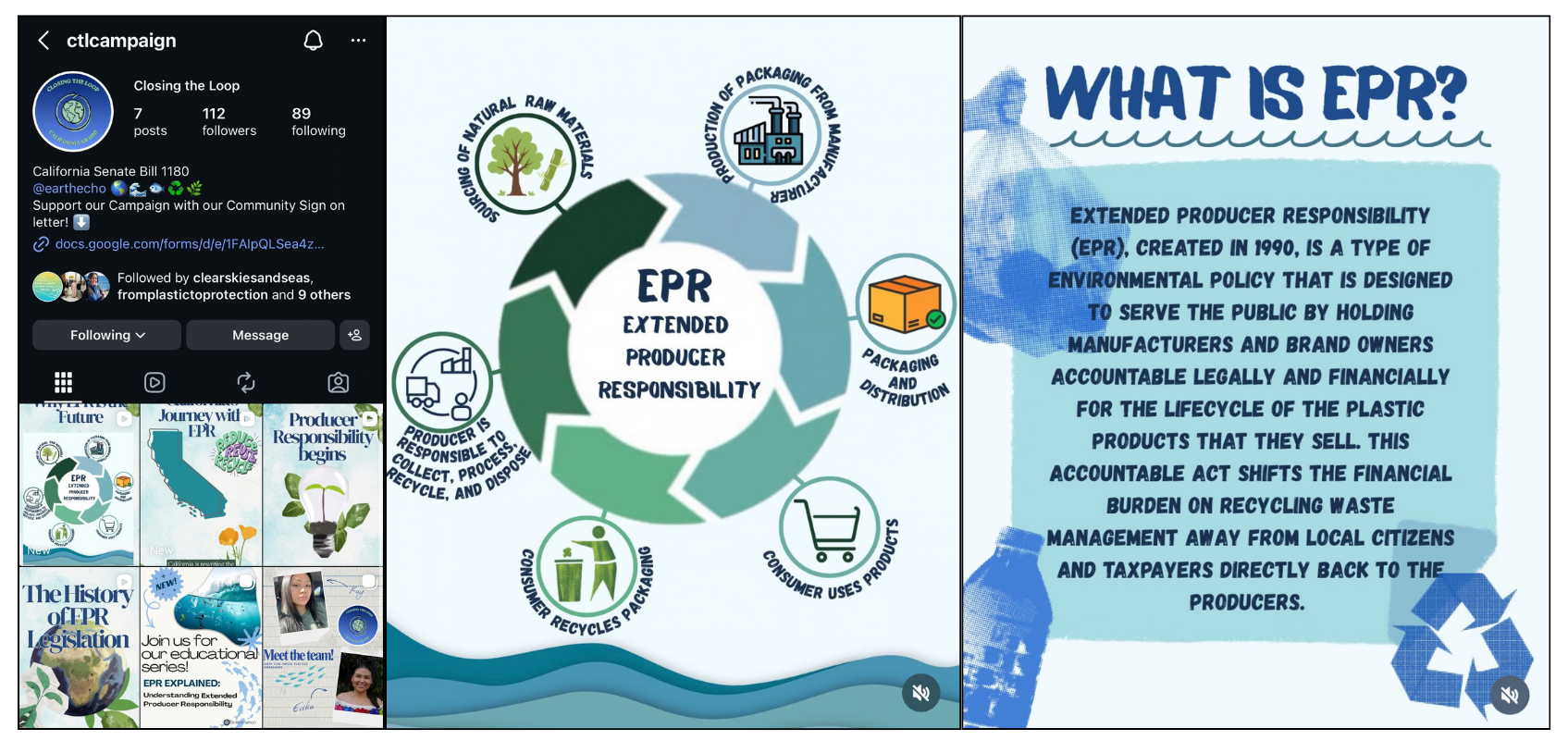
Closing the Loop
I began my campaign by learning how to communicate the background and importance of SB 1180 in a way that was understandable to people who might not have a background in environmental policy. I created educational content through my Closing the Loop Instagram page, sharing information about the policy, its relevance to plastic pollution, and why policy-based solutions matter.
Social media became one way for me to make the issue more accessible. Instead of only sharing information about plastic pollution itself, I wanted people to understand how policy can influence the systems that determine how plastic is produced, used, managed, and kept in circulation.
I also created a Community Sign-on Letter to SB 1180: Closing the Loop. This gave people an opportunity to take a more direct role in supporting the campaign. Collecting sign-ons showed me that community engagement does not always have to happen through a large event. Sometimes it starts by giving people clear information and a simple way to add their voice. Throughout my campaign, I was able to reach people through several different forms of community engagement.
Another part of my campaign was bringing the conversation into my own environmental network. I presented information about SB 1180 to members of Minorities in Shark Sciences & peers a part of Ocean Science Expedition Academy, sharing background on the policy and its importance. These interactions gave me an opportunity to practice explaining the issue verbally and answering questions from other people interested in marine conservation and environmental work.
From Community Outreach to Capitol Hill
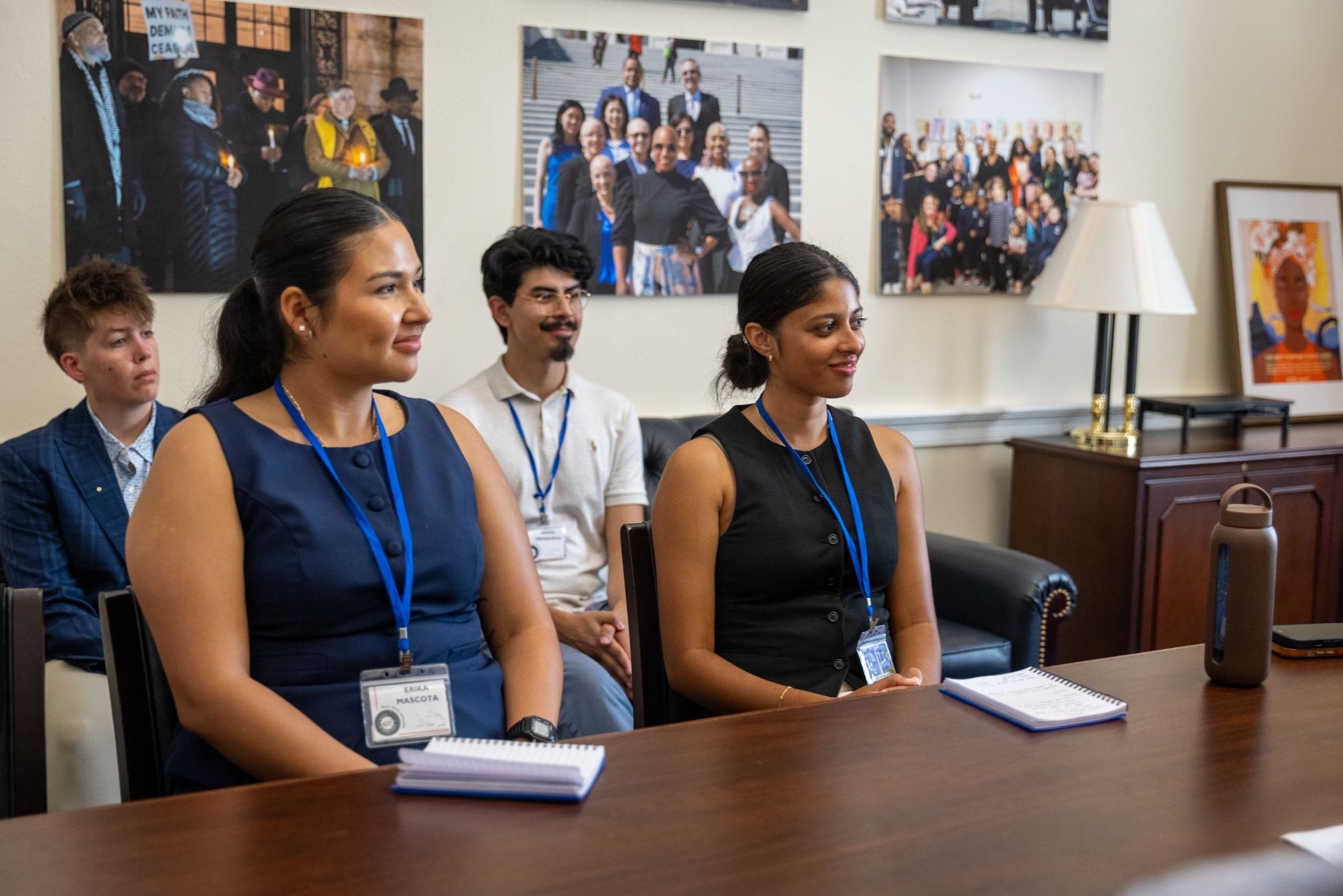
My campaign also connected with the larger advocacy experience provided through EarthEcho. During the program, I had the opportunity to travel to Washington, D.C., as one of 25 Marine Plastics Ambassadors and participate in Advocacy Week on Capitol Hill. Alongside other young advocates from across the country, I met with the offices of Senator Alex Padilla, Senator Elizabeth Warren, Senator Tammy Duckworth, Senator Edward J. Markey, and Representative Ayanna Pressley to discuss plastic pollution and policy solutions.
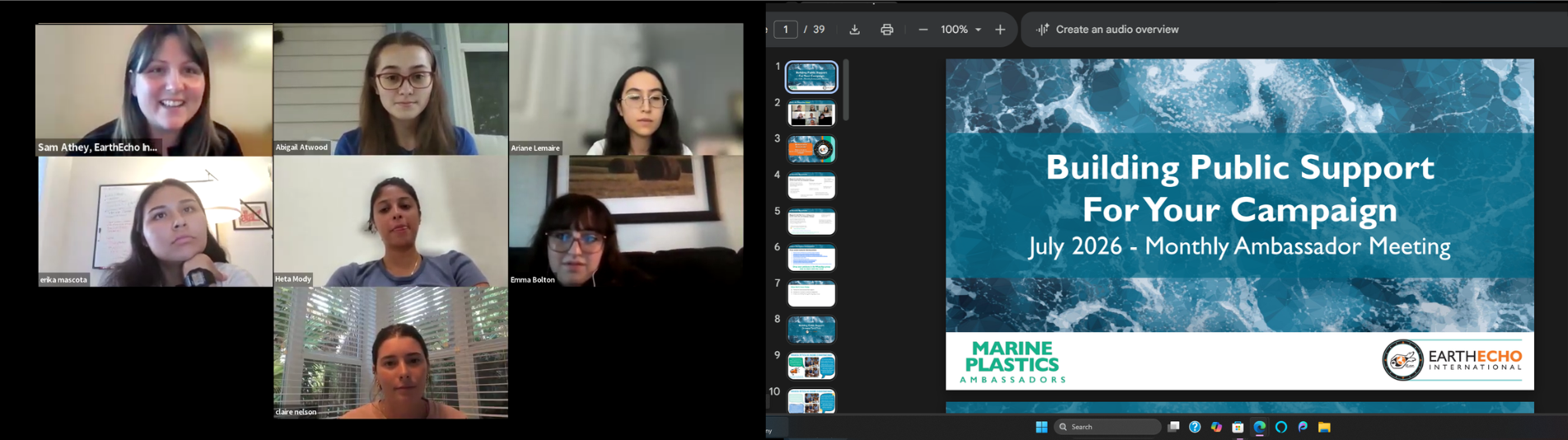
Preparing for those meetings was an important part of my experience. During the program, we learned how to craft our messages and communicate effectively with policymakers. The guidance from Christopher Pearce and the other panelists during the “Crafting Your Message for Congress” session was especially helpful. It made me think differently about how to take scientific information and turn it into a message that connects with people outside of the scientific community.
The Capitol Hill experience expanded that work into a different setting. Meeting with five congressional offices allowed me to participate in policy conversations alongside other young advocates and to share youth perspectives on plastic pollution. It also helped me understand that advocacy can happen at multiple levels; from educating people in your own community to communicating directly with policymakers.
Throughout the campaign, I collected 19 sign-ons for my Community Sign-on Letter supporting SB 1180. I also gained 110 followers on my Closing the Loop Instagram account while sharing educational information about the policy and plastic pollution. In addition, I presented on SB 1180 to more than 10 MISS/OSEA members during various meetings.
While these numbers may seem small compared with a large public campaign, each represented someone who had the opportunity to learn more about plastic pollution and engage with a policy issue that they may not have previously been familiar with. The sign-on letter in particular gave community members a way to publicly add their support, while the Instagram page allowed me to continue sharing information beyond the people I could reach directly.
For me, the impact of this campaign is therefore not only about a single number. It is about building my own capacity to communicate about plastic pollution and creating opportunities for other people to learn about and participate in policy conversations.
Finding My Voice as an Advocate
One of my biggest takeaways from this experience was realizing that being a scientist and being an advocate do not have to be separate roles.
Before this program, I was much more familiar with the scientific side of environmental issues. I knew how to talk about marine ecosystems, research, and the impacts of pollution. Advocating for policy required me to think about those issues differently. I had to ask myself: How do I take what I know scientifically and communicate it in a way that encourages people to understand the issue and take action?
That was one of the biggest challenges of my campaign. Environmental policy can be complicated, and I did not want to overwhelm people with technical information or assume that everyone already understood the issue. Creating educational content and presenting on SB 1180 helped me practice breaking down information while still explaining why the policy matters.
The experience on Capitol Hill pushed me even further. Speaking with congressional offices was different from speaking with other scientists or environmental professionals. I learned that effective advocacy requires preparation, clear communication, listening, and the ability to explain why an issue matters to people and communities.
I also learned that environmental advocacy is a process. A campaign does not necessarily end with an immediate policy change. Building awareness, getting people involved, developing relationships, and learning how to communicate effectively are all parts of creating momentum for longer-term change.
Most importantly, this experience helped me see a clearer connection between the career I have been building in marine science and my growing interest in environmental policy. I want to continue developing the skills to bring scientific knowledge into conversations about environmental decisions and community needs.
Looking Ahead
Although the Marine Plastics Ambassador program is coming to an end, I do not see this campaign as the end of my work on plastic pollution.
There is still more I want to learn about environmental policy and more opportunities I want to explore for connecting science with advocacy. I plan to continue educating others about plastic pollution and following policy efforts that address plastic production, waste, and pollution.
The experience I gained through EarthEcho will also carry into my future work as an environmental scientist. I want to continue developing as someone who can move between science, community engagement, and policy rather than seeing them as separate areas of environmental work.
My campaign around Closing the Loop started with a policy issue I wanted to better understand and share with others. It grew into an opportunity to practice community outreach, create educational content, collect community support, and participate in conversations with policymakers in Washington, D.C.
There is still work to be done to close the loop on plastic, but this experience has given me a stronger foundation for being part of that work. I am leaving the Marine Plastics Ambassador program with not only a better understanding of policy advocacy, but also a clearer idea of how I want to use my background in marine science to contribute to environmental solutions.
Learn more about the EarthEcho Marine Plastics Ambassador program at https://earthecho.org/plastics-ambassadors.