

Did You Really Need That Straw?
This blog post was written by Keira Blakey, a 2026 Marine Plastics Ambassador.
As a marine biologist, I have encountered plastic pollution in every role I have held, from education to research. During my undergraduate studies, my marine ecology courses opened my eyes to how pervasive the problem has become. Plastics have been found everywhere from the deepest waters on Earth to the most remote corners of the planet; items like raincoats, toothbrushes and plastic bottles, sitting untouched in places humans will never see. That reality inspired me to act within my own home state and to help everyday people find simple, meaningful ways to cut back on plastic. In April 2026, the “Did you really need that straw?” campaign launched in Florida. The goal of the campaign was simple: gain public support for the overturning of Florida’s preemption laws.
Florida’s Ban on Bans
Beginning in 2008, Florida’s government introduced a series of preemption laws, targeting bans on single-use plastics. These "ban on bans" started with plastic bags and auxiliary containers, then expanded to plastic straws and styrofoam by 2019. The result: local governments, the very bodies closest to their communities' waterways, lost the authority to regulate plastic pollution on their own terms.
As a lifelong resident of Florida’s Treasure Coast, I have watched my community be impacted firsthand by plastic pollution, primarily from single-use plastics. Loosening or fully repealing these preemption laws would allow local governments to regain control over how they handle plastic pollution, improving water quality, citizen health, and benefiting the local economy.
The goals of my campaign directly align with the values of the Marine Plastics Ambassador program, turning scientific awareness into community-level action. But the biggest lesson of all was showing young people that you are never too young to make a difference.
Do You Really Need That Straw?
Over the course of six months, I developed a successful campaign that engaged people from all over the United States in plastic policy and living a more sustainable lifestyle. The majority of my work was digital; using social media as a vessel to reach the audiences who mattered most, especially young people interested in marine and environmental conservation.
Before joining EarthEcho, I had a pre-existing nature-focused Instagram account with about 200 followers. Through consistent, intentional posting of environmental content, I grew that account to over 3,400 followers by the end of the campaign — a seventeenfold increase that turned a small personal page into a genuine platform for advocacy.
That growth wasn't accidental. I posted educational content that broke down complex issues surrounding plastic pollution, allowing anyone to understand the issue and take action. Instead of just talking about plastic pollution, I also shared simple, everyday swaps that made sustainability feel achievable rather than overwhelming, showing people that small choices compound into real change. And I used my marine biology background to ground every post in science, giving my audience a reason to trust what they were learning.
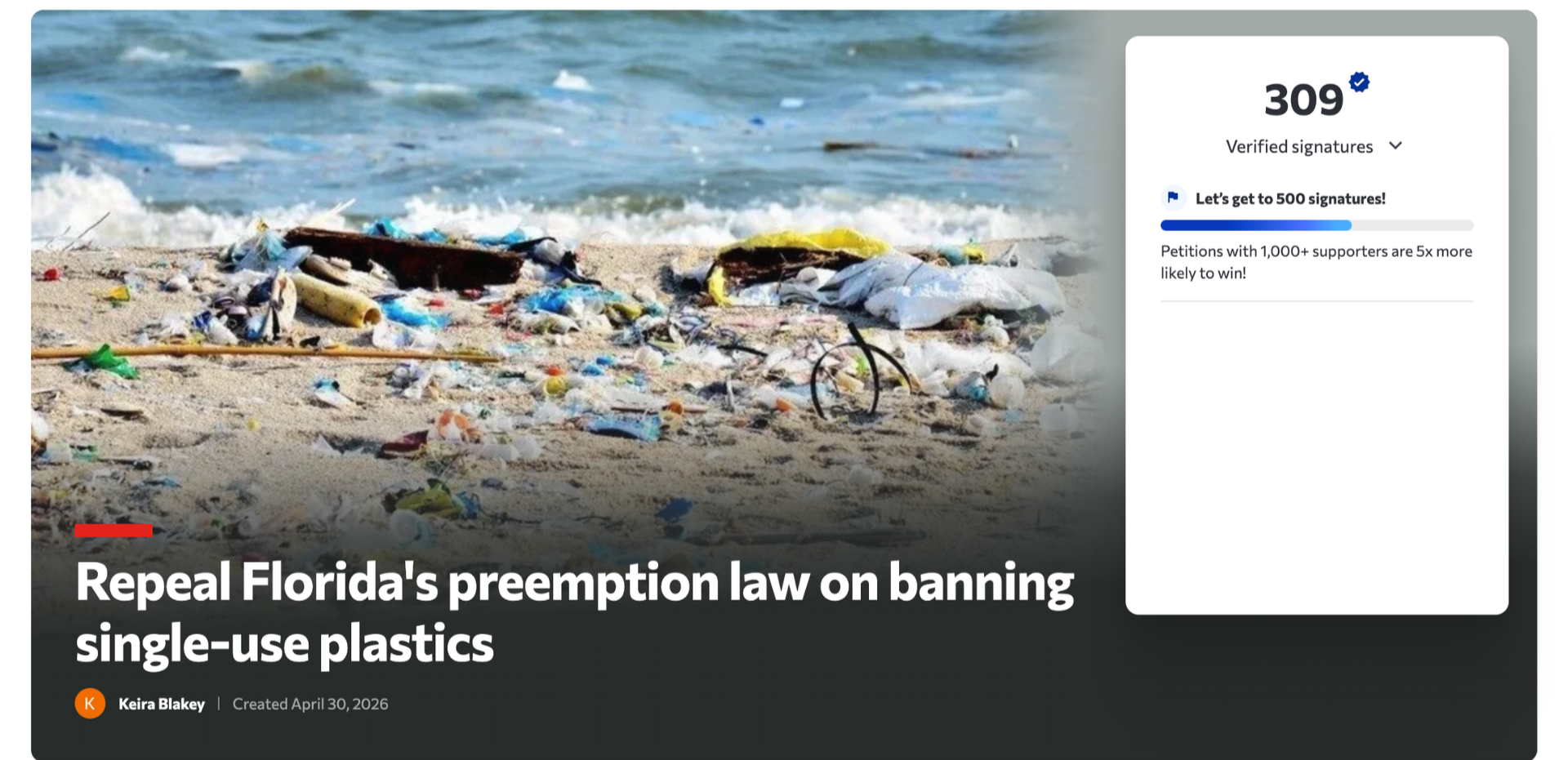
After several weeks of exclusively posting plastic pollution-related content, I created a petition that garnered over 300 signatures. Not only does this exhibit that it is an issue that matters to people, but it gives the campaign a concrete, citable demonstration of public support. Those signatures matter because they show legislators that the issue had real people backing the cause.
Seeing everyday people support the narrative was an overwhelmingly positive feeling. However, to encourage the state legislature to take the work seriously, it was also important to have the support of environmental nonprofit organizations. After sending what felt like hundreds of emails and having meaningful meetings with dozens of nonprofits, four groups agreed to publicly support my campaign by signing my Letter of Support linked on my website. These public supporters were Friends of Palm Beach, Sea Turtle Conservancy, Florida Oceanographic Society, and 7Seas Collective. Each organization also brought its own audience into the fold: their followers became potential petition signers, content sharers, and advocates, multiplying the campaign's reach far beyond my own. Support came in other forms as well. The Florida Springs Council, a driving force in resisting the introduction of more preemption laws, has been beyond helpful in figuring out how this data could make a difference.
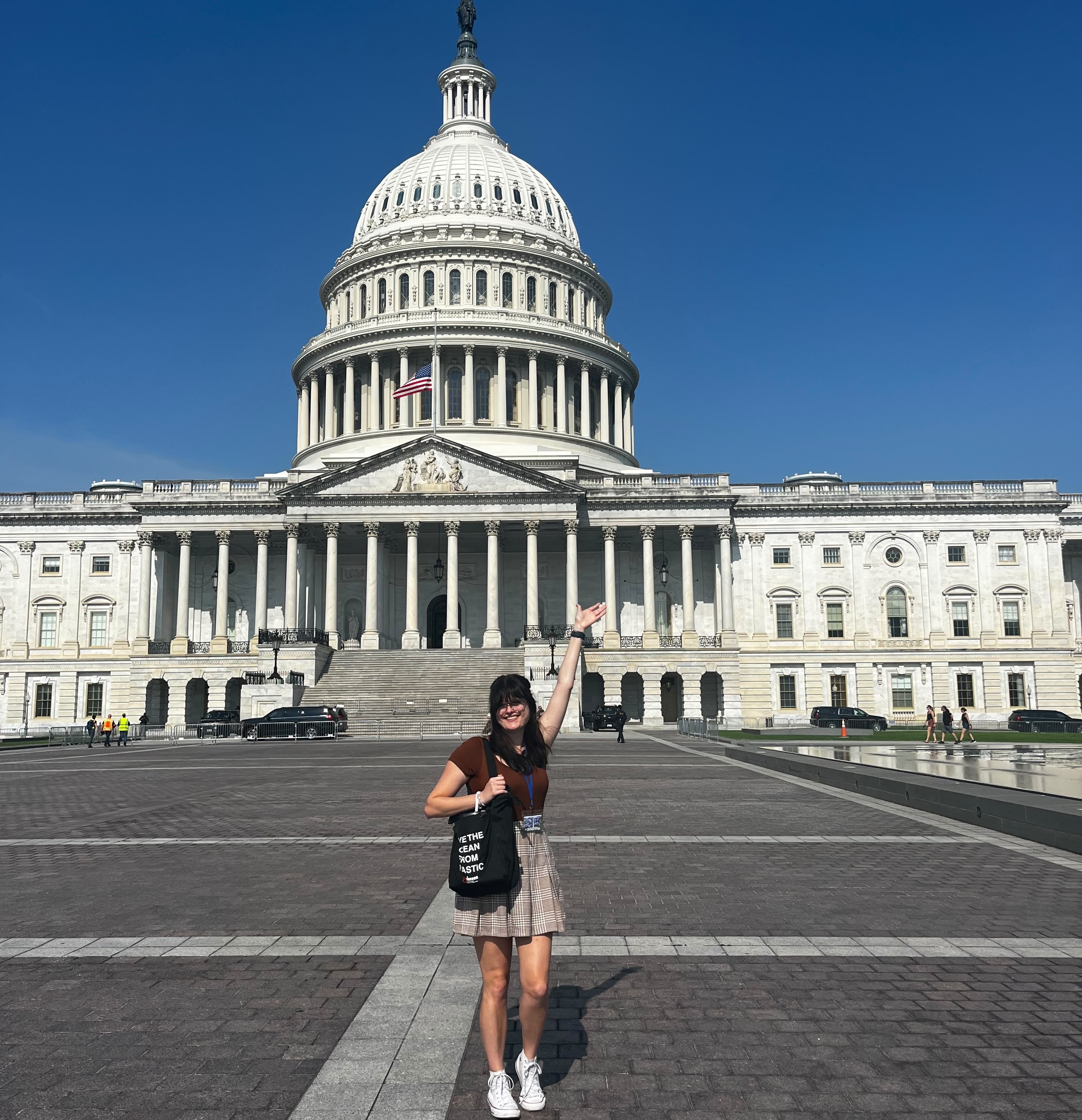
In July, I traveled to Washington, D.C. with EarthEcho International to speak with elected officials about plastic policy and the different solutions to Florida’s growing plastic problem. It was the moment the campaign transformed from a digital movement into a direct conversation with the people who could actually change the law. I brought what I learned from D.C. back home to Florida, where I helped create a virtual Hill Day with other state ambassadors to share youth perspectives on the preemption laws among other policies with state legislators and carrying the momentum from the capital back into our own communities.
The “Did you really need that straw?” campaign spanned six months and reached over 3,400 people during that time.
Lessons in Advocacy
Social media played a major role in the success of this campaign. My Instagram account grew from roughly 200 followers to over 3,400 followers. More followers brought more views, with certain posts accumulating over 10,000 views and garnering thousands of likes. More importantly, that audience wasn't passive: followers engaged with the content, shared it, and carried the message into their own networks, turning a personal page into a genuine platform for advocacy.
Social media also opened the door to brand partnerships with companies actively fighting marine plastic pollution, including Stream2Sea and WanderLust Hats & Apparel. Both brands back their sustainability values with action, donating money to ocean conservation and prioritizing eco-friendly products. Working with them let me amplify the campaign's message to my audience while spotlighting businesses that put real funding behind protecting our waterways.
The support from nonprofit organizations was instrumental in the success of the campaign. In total, five groups signed the Letter of Support, with four groups consenting for their support to be public. Nonprofits offering public support gave the campaign credibility beyond my qualifications, while also bringing their own audiences and advocacy networks into the fold. Each organization's supporters became potential petition signers, content sharers, and advocates, extending the message into communities I couldn't have reached alone.
The 2026 Marine Plastics Ambassador program opened so many doors and provided me with many unique opportunities, which I am beyond grateful to have been involved in. My biggest success throughout my campaign was traveling to Washington, D.C. to meet with elected officials and discuss plastic pollution. As a marine biologist, I focus on the environmental impacts of plastic pollution, but have never stopped to consider how the same pollution may be impacting human health. During our advocacy workshops in Washington, D.C., I learned how to speak about plastic pollution without having an environmental focus. I had the opportunity to learn from professionals in the fields of marine science, environmental law, and even from the corporate perspective — each bringing a different lens to the same problem. This opened my eyes to the often overlooked impacts of plastic pollution and brought them to the table during meetings. By travelling to the U.S. Capitol, I was able to effectively communicate with elected officials about the negative impacts of plastic pollution on my home state, with the hope of planting a seed that will lead to change.
With the many successes of the campaign, there also came many challenges. Gaining support was arguably the most difficult part. I met with over fifteen nonprofit organizations during the span of the campaign, and even though many of them support the mission, the majority could not publicly show support due to their own organizational policies. The only way to overcome this challenge was to be persistent and not let the phrase “unfortunately we cannot show public support” dim my morale. I continued to reach out to groups all over the country, and worked with Florida Oceanographic Society’s Advocacy Team to find groups who may be willing to support my work.
As a marine biologist with a career based solely in research and education, this was my first experience in any form of advocacy. Despite my passion for protecting our planet, I had never learned how to effectively research, communicate, or advocate for specific environmental policies. This program taught me all of those things. It taught me how to be a successful and impactful environmental advocate. It provided me with the necessary tools to continue this work at home, thus teaching others how to be an advocate.
Looking Ahead
Even though the program may be ending, the “Did you really need that straw?” campaign is nowhere near done!
I am currently planning a letter-writing event with the Advocacy Team from the Florida Oceanographic Society, scheduled for mid-October. This event will give residents of the Treasure Coast a chance to learn how to effectively write letters to elected officials, ask questions about the impacts of Florida’s preemption laws, and learn about how to advocate for specific bills. During this event, participants of any age can write a letter or send a coloring page to an elected official of their choice, expressing their support of the campaign and the loosening of these laws.
Additionally, all the data acquired over the past few months will be handed over to the Plastic Free Florida Coalition. With the help of the Florida Spring Council, my hope is that the data from my campaign will show meaningful public support that the coalition is able to use as they introduce a bill to loosen the preemption laws in a future legislative cycle.
If you are interested in learning more about marine conservation, following this campaign, or want to know more about how to protect our planet, check out my Instagram @_tides.and.trails_ and website protectingdeepblue.com. You can also email me at protectingdeepblue@gmail.com.
I hope to connect with you soon!