

Upcycling in NYC: Sewing Up the Climate Gap
This blog post was written by Zihan Wang, a 2025 Marine Plastics Ambassador.
Sewing up the Climate Gap is an organization that focuses primarily on reducing textile waste through an upcycling fashion line, along with teaching local communities how to mend and upcycle their own clothing. This project started as a result of my interest in recycling synthetic-blend clothing, which eventually led me to understand the root of the problem. People don’t understand how to value their own clothes and see clothes are non-disposable. Recent developments in fast fashion have begun to convince people that clothing is one-time-use and we constantly need new clothes. This is not the case; we can always alter the clothing we have into new clothes, and by doing this over and over again, we can save synthetic fabrics from entering the textile ecosystem.
I had originally started this project to solely upcycle clothes. I had always wanted to do something with all the clothes I saw in thrift stores that were out of the internet trend cycle and were probably going to end up in landfills. I also learned that returned clothes don’t usually end up being resold– instead, they’re usually shipped to clothing dump sites in socioeconomically undeveloped countries. This harms the local populations living there. This is when I understood how important it is for my project to collaborate with local organizations and communities to spread this information and encourage change.
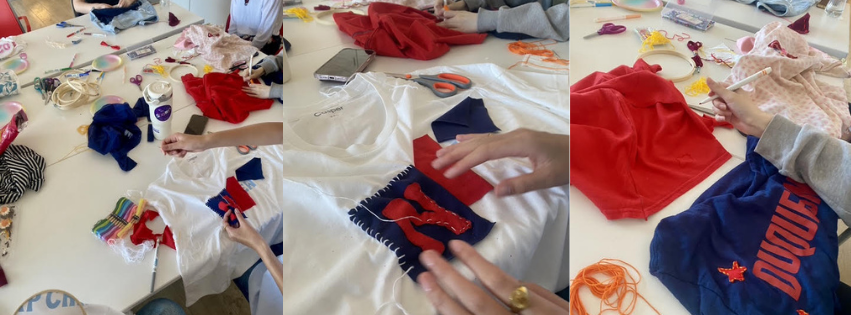
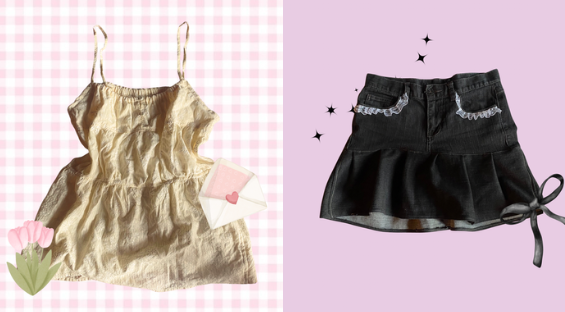
I had made upcycled clothing that I sold on Depop. Most of the fabric from this clothing was relatively affordable. I bought them from yard sales, sales in thrift stores, and fabric scrap places. I partnered with CAN International and Menicus Society of the Arts to secure a location for my program. I also collaborated with Coastal Clubs, another sustainable organization, to fund this event. We advertised this program via Instagram, for which we both started accounts. We also advertised at our schools, NYU, and Hunter High School.
This event allowed participants to meet like-minded sustainable individuals or just get involved in the local NYC sustainable community. We promoted different thrift stores and ethical organizations that they could get involved with. We also had an instructor teach the attendees how to hand-sew. An accessible way to upcycle and mend their own clothes.
Project Impact
I reached 7,632 people through outreach on the Sewing up the Climate Gap Instagram page. We engaged 21 attendees, with many continuing their project or taking up second-hand fashion thereafter. I received lots of messages after the events of people downloading good second-hand fashion apps like Vinted, Depop, Thredup, or asking me about in-person thrift stores they can go to. Many have also asked for help regarding sewing machines I recommend they purchase. I had also sold 5 items, netting in a total of $180 in profit! All of which I have reinvested back into my project. Further, I kept over 100 lbs of textiles from entering landfills!
Reflection and Learning
A major challenge I faced was my lack of experience with sewing machines. I have yet to use many prior to this project. I was also unfamiliar with how to design and execute upcycled clothing in a way that it could be sold. I use a variety of YouTube and short-form content in order to understand how to use the sewing machine. I also used this as an opportunity to bond with my grandmother, as she was leaving the US soon and wanted to form a stronger relationship with me. She has lots of experience with making clothes as she made all of my mother’s growing up. I loved working with her, and she taught me so much. This entire experience was so wonderful for my relationships and passions.
Another major challenge I faced was in planning the project. It was hard to secure a location since most venues in NYC are incredibly expensive. This was quickly alleviated, though, through the connections I had made outside of EarthEcho. CAN International is headed by a mentor of mine, and I got her permission to use one of the venues they typically rent– a price they also helped pay for us. I’m eternally grateful for her help, and I love the closer connection I was able to make with her.
Next Steps
Although college has been stressful, and I started college at the same time I was working on this project, I am 100% looking forward to expanding on what I am currently doing. I hope to sell many more clothes and make more clothes with the materials I have, and EarthEcho helped me obtain. I have an abundance of designs I want to execute (including a quilt with all my scrap fabrics, and a dress made out of denim!). I also hope to make at least a few more events for people within my community. I had a lot of people reach out, disappointed they weren’t able to make it since college had already started at that point, and many people had left NYC. I’m hoping to do another project in the winter or summer in order to reach a larger audience. Although I have no experience, I’m also excited to make more content, especially videos, detailing my process. Whether it is through TikTok or YouTube, I can see a large community being reached there.