

Reel Change: Fighting the Invisible Nets of Florida’s Indian River Lagoon
This blog post was written by Alex Webster, a 2026 Marine Plastics Ambassador.
Ghosts are real, and they live in the Indian River Lagoon. They don’t haunt old houses. They drift across seagrass beds, coil around mangrove roots, and hang from dock pilings. Scientists call them ALDFG: abandoned, lost, or otherwise discarded fishing gear. The rest of us call them ghost gear. A snarl of monofilament line, a torn gillnet, or a forgotten trap doesn’t stop fishing when the angler goes home. It keeps catching, entangling, and killing for as long as it exists.
And it persists for a very, very long time. Most modern fishing gear is made from high-molecular-weight polymers (such as Nylon-6), whose strong carbon–carbon and carbon–nitrogen bonds resist hydrolysis and biodegradation. Ghost gear can persist for more than 600 years. Sunlight doesn’t make it disappear; it only photodegrades it into smaller and smaller pieces, turning a single lost line into countless microplastics. Ghost gear makes up roughly 10% of marine plastic pollution by mass, yet it drives a wildly disproportionate share of the entanglements and deaths that plastic causes in our oceans.
As someone who fishes these waters, I can’t look away from what that means for my home. The Indian River Lagoon stretches 156 miles along Florida’s east coast and is one of the most biodiverse estuaries in North America, and its fish, birds, dolphins, manatees, and sea turtles are paying the price for gear we leave behind. This past summer, Brevard Zoo’s sea turtle rehabilitation center had to euthanize two loggerheads, one of them found stranded in the lagoon itself, because their injuries from derelict fishing gear were too severe to heal. A third turtle survived only after losing a flipper. Rescuers have reported bottlenose dolphins, calves included, wrapped in discarded line in the very same waters. These aren’t distant headlines. They’re our neighbors.
LagoonGuard
What shocked me most as I dug into the problem was how narrow Florida’s legal safety net is. Section 379.2424 of the Florida Statutes authorizes the Fish and Wildlife Conservation Commission to run a trap retrieval program, but only for spiny lobster, stone crab, blue crab, and black sea bass traps, and only for traps left in the water during each species’ closed season. Monofilament line, gillnets, longlines, and nearly every other kind of gear that ends up on our seafloor fall completely outside it. Meanwhile, the monofilament recycling bins that do exist at our piers and boat ramps depend largely on voluntary efforts, so coverage is patchy at best.
That gap became LagoonGuard: Reel Change for Plastic-Free Waters. LagoonGuard is a Florida policy campaign with one mission: eliminate ghost gear before it ever enters our waterways. Our proposal, the Florida Sustainable Fisheries Recovery Act (FSFRA), has two goals. First, amend s. 379.2424 so that ghost gear recovery covers all abandoned, lost, and discarded fishing gear statewide, not just four types of traps. Second, secure a state mandate requiring standardized “Zero-Trace” monofilament recovery stations at 70% of Florida’s publicly accessible fishing sites by 2027. Instead of leaving cleanup to volunteers alone, FSFRA moves Florida toward Extended Producer Responsibility (EPR), so the industry that makes and sells fishing gear shares responsibility for what happens to it at the end of its life. That is exactly what the Marine Plastics Ambassador Program is about: not just picking plastic out of the water, but changing the rules so it stops getting there in the first place, while protecting the marine ecosystems that power Florida’s blue economy.
LagoonGuard started with science. Before I could ask anyone to change a law, I needed to understand ghost gear down to the molecule: why nylon line refuses to break down, how it fragments into microplastics, and why such a small share of marine plastic by weight causes so much death.
From there, I took LagoonGuard out of the research phase and onto the water. Working with partners, we installed 10 new monofilament recovery stations at piers, boat ramps, and parks, giving anglers a simple, visible place to drop used line instead of letting it blow into the lagoon. Each one is a small, working preview of what our 70% statewide mandate would look like. We also organized “Trash Fishing” ghost gear cleanups, where anglers put their skills to work hauling derelict line and gear out of the water instead of fish. Altogether, LagoonGuard has pulled 30 pounds of fishing line out of circulation.
Policy change needs public pressure, so I launched the FSFRA petition and built LagoonGuard’s presence online. On Instagram (@lagoon_guard), and through our “State of the Strand” digital campaign, we give people who may never attend a cleanup a way to see the problem, share it, and sign on. I also built a visual identity for the campaign, a logo with a spiny lobster, mangroves, and a recovery station, so that LagoonGuard would be instantly recognizable at a boat ramp, in a legislator’s office, or in someone’s feed.
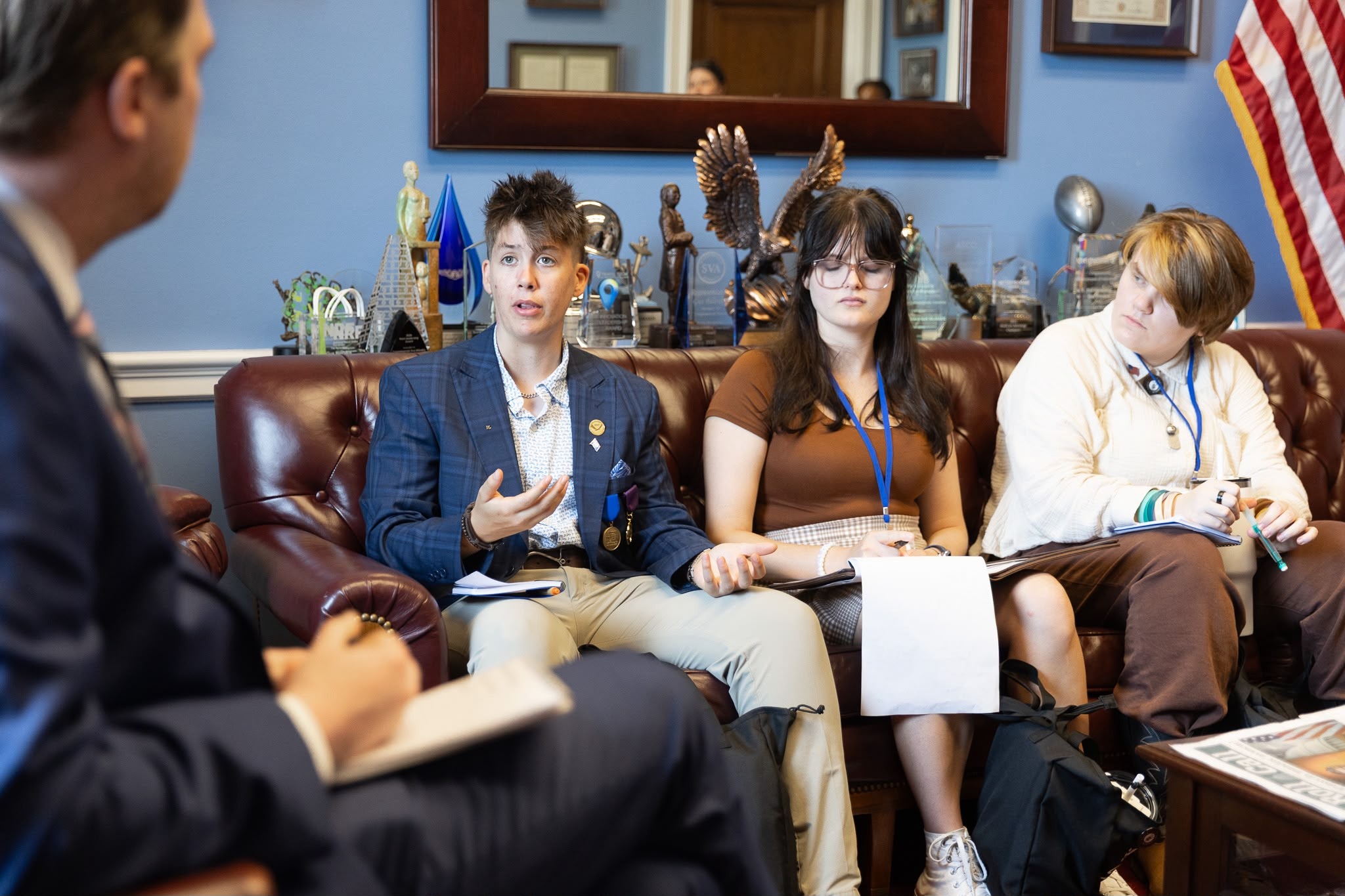
Then I took LagoonGuard to decision-makers. Over the course of the program, I held six meetings with legislators and decision-makers in Indian River County and traveled to Washington, D.C. for EarthEcho’s Hill Day, carrying the story of Florida’s lagoon to the national level and seeing firsthand how federal ocean policy and state action fit together. Back home, I helped lead an advocacy workshop in Florida with my fellow ambassadors, helping other young Floridians turn concern into action by learning how policy is made and how to make their voices heard by the people who make it. Teaching others to advocate multiplied LagoonGuard’s reach far beyond what I could do alone.
Campaign Impact
LagoonGuard turned a problem most people never see into numbers that decision-makers can’t ignore. Here’s what we accomplished during the 2026 Marine Plastics Ambassador Program:
- 10 new monofilament recovery stations installed, permanent infrastructure that keeps collecting line every single day.
- 30 pounds of fishing line recovered and kept out of the Indian River Lagoon.
- 100 petition signatures in support of the Florida Sustainable Fisheries Recovery Act.
- 6 meetings with legislators and decision-makers, including advocacy in Washington, D.C.
- 1 Florida advocacy workshop co-led across Florida.
- 3 key partnerships developed: ORCA, Lines in the Lagoon, and OneLagoon.
- Social media: Over 10,000 views across Instagram, LinkedIn, and Facebook.
These numbers matter because of what sits behind each one. Monofilament is so light that 30 pounds of it can stretch for miles, and every strand we removed is one that will never wrap around a pelican’s wing, a dolphin calf’s fluke, or a loggerhead’s flipper. Unlike a one-time cleanup, our 10 recovery stations keep working long after we leave, quietly intercepting line before it ever reaches the water. Just as importantly, they are proof of concept. When I tell a legislator that Florida can put recovery stations at 70% of its public fishing sites by 2027, I’m no longer describing an idea. I’m pointing to stations that already exist and already work.
Every one of our 100 petition signatures is a Floridian telling lawmakers that ghost gear is their problem too, and every one of our six meetings put a gap in Florida law in front of someone with the power to close it. Before LagoonGuard, s. 379.2424 was an obscure trap statute. Now the people who write our laws have heard, face to face, why it needs to cover every kind of fishing gear. Taking that message to Washington, D.C. showed me that Florida’s fight is part of a national one, and co-leading the advocacy workshop means LagoonGuard’s impact doesn’t stop with me. Every person trained there can now walk into their own legislator’s office with the same confidence.
My EarthEcho Journey
My biggest success as a Marine Plastics Ambassador wasn’t any single number. It was watching LagoonGuard grow from a slide deck into something real: stations bolted down at fishing sites, line pulled out of the water, signatures on a petition, and conversations with lawmakers who had never thought about ghost gear before. Seeing a recovery station I helped install actually filling up with line is a feeling I won’t forget.
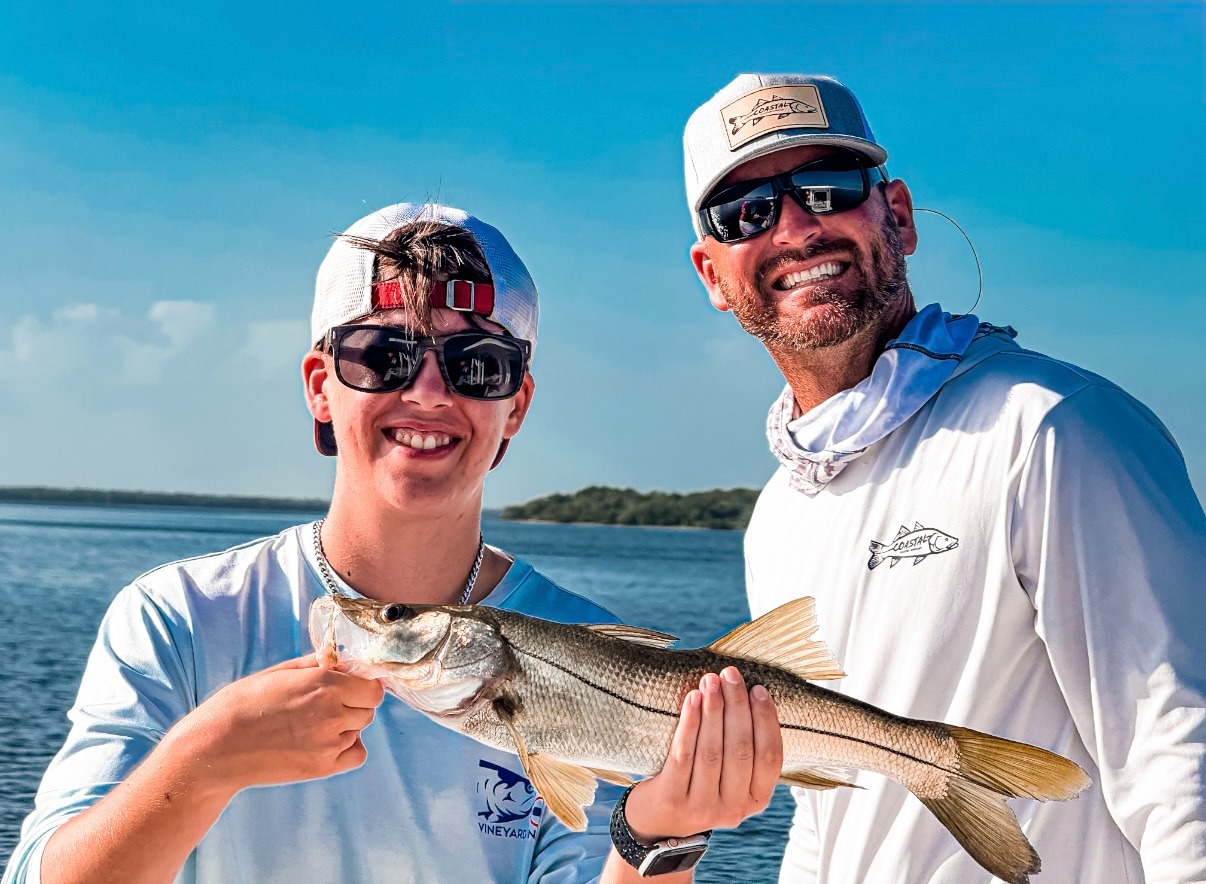
The hardest part was making an invisible problem visible. Ghost gear lives underwater, in the mangroves, and out of sight, so most people simply don’t know it’s there. I learned that facts alone don’t move people. Stories do. Pairing the chemistry of a 600-year polymer with the image of a sea turtle that lost its flipper, or a stat with a photo of a snook from our own lagoon, is what made people stop scrolling and start signing. I also had to learn how to talk about accountability without making anglers feel like the enemy. My April talk was about holding the fishing industry accountable, and I still believe that. But I learned that the anglers I fish beside every week are some of the lagoon’s best potential protectors, and that “Reel Change” works best when it invites the fishing community in rather than pointing fingers at it.
Along the way, I grew as a leader and communicator. I learned to translate science into policy language, to prepare for and lead a meeting with a decision-maker, to speak in front of a room, and to teach other advocates the skills I was still building myself. Most of all, I learned how policy really works: that a law can be decades old and still have a gap you can drive a boat through, that a single sentence in a statute can decide which wildlife gets protected, and that ordinary people, including students, can walk into a lawmaker’s office and change the conversation.
Looking Ahead
My time as a Marine Plastics Ambassador may be ending, but LagoonGuard is just getting started. Our deadline is written into our name: Zero-Trace recovery stations across Florida by 2027. Over the coming months, I plan to keep building support for the Florida Sustainable Fisheries Recovery Act ahead of the 2027 legislative session by growing our petition, following up with the decision-makers I’ve already met, and [working to find a legislative sponsor / next step for the bill]. On the ground, I want to keep expanding our network of recovery stations, host more “Trash Fishing” cleanups, and deepen our work with ORCA, Lines in the Lagoon, and OneLagoon.
You don’t need a boat or a law degree to help. Here’s how you can join the movement:
- Sign the FSFRA petition at this link.
- Join a “Trash Fishing” ghost gear cleanup back in Florida.
- Share the “State of the Strand” digital campaign with your friends and followers.
- Report abandoned fishing gear when you see it, and recycle your monofilament at a recovery station.
- Follow LagoonGuard on Instagram at @lagoon_guard to see where we’re headed next.
The ghosts in our water were made by people, which means people can stop them. Every recovered fishing line is one less ghost in our oceans.
Learn more about the EarthEcho Marine Plastics Ambassadors at https://www.earthecho.org/plastics-ambassadors.