

Reducing Styrofoam And Single-Use Plastic
This blog was written by Eva Palacios, a 2026 Marine Plastic Ambassador.
For my Marine Plastic Ambassador project, I focused on reducing styrofoam and single- use plastics in Connecticut. I advocated for Connecticut House Bill 5524, which focused on reducing styrofoam containers and limiting single use plastics in restaurants.
I chose this topic because at The Maritime Aquarium, a local aquarium where I volunteer, we have focused on reducing single-use plastics when ordering takeout. Whether it is opting out of a plastic straw, fork, or bringing in your own container. Small changes can make a difference. Information was gathered by a group of volunteers who went to beaches along the Long Island Sound and collected data on the trash they found. Once all the data was adhered, we found that a large amount of trash was single-use plastic. After finding this out, we focused on South Norwalk, where many local restaurants are located.
While working on this project, I was sent an application to become a Marine Plastics Ambassador. I decided to apply because I wanted to advocate and educate as many people as possible about how dangerous plastic pollution can be. I also wanted to become more informed about these issues and learn how small changes can make a difference. Most importantly, I wanted to educate people on how they can make more sustainable choices.
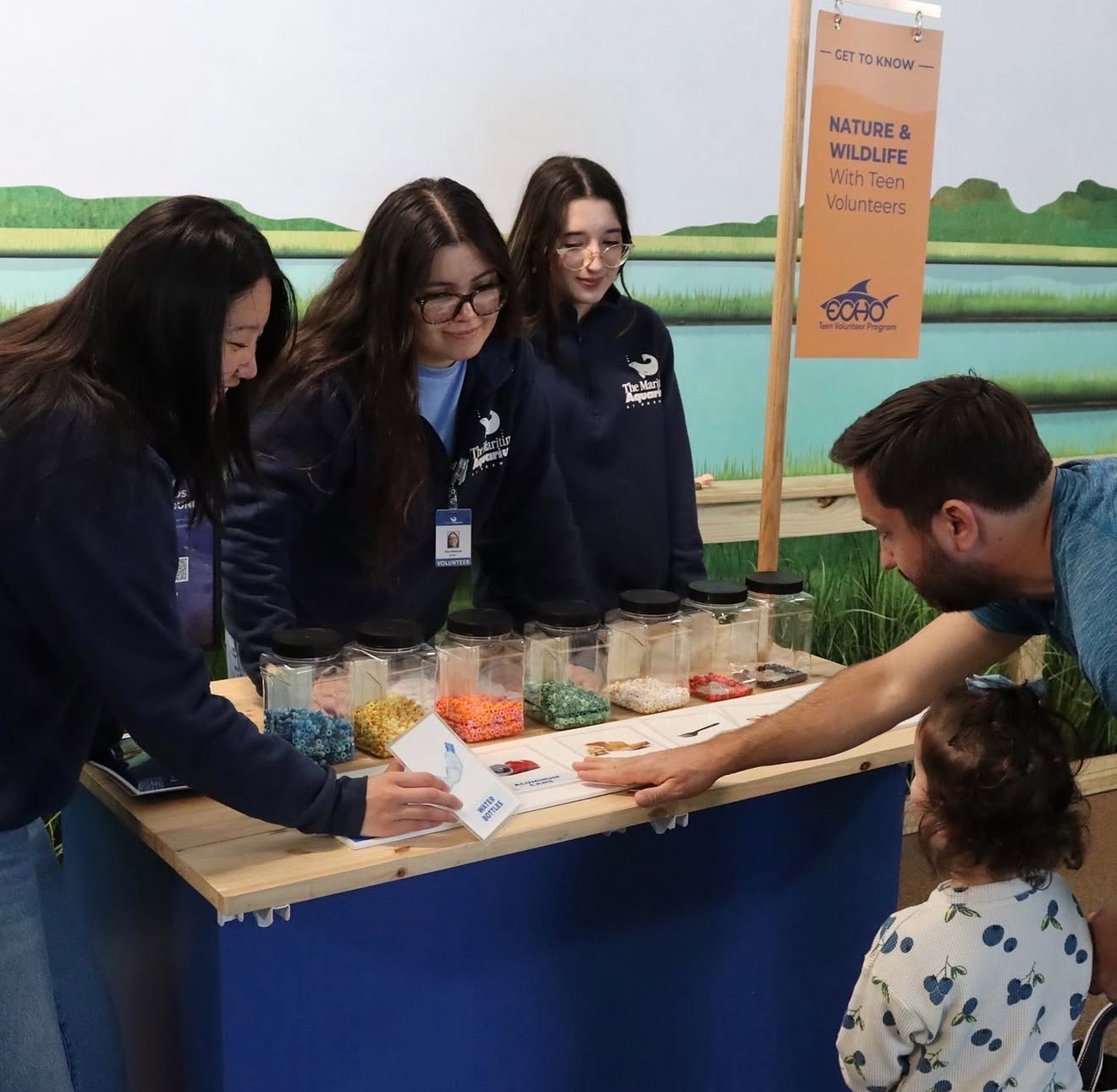
During my project, I focused on educating my community about the effects single-use plastic has. At the aquarium where I volunteer, I helped create an educational floor cart about single-use plastic waste found in Connecticut. The cart included a data chart and information about the plastic pollution. I used the cart to educate guests about simple sustainable actions they can make, such as switching to reusable water bottles, straws, bags, and containers.
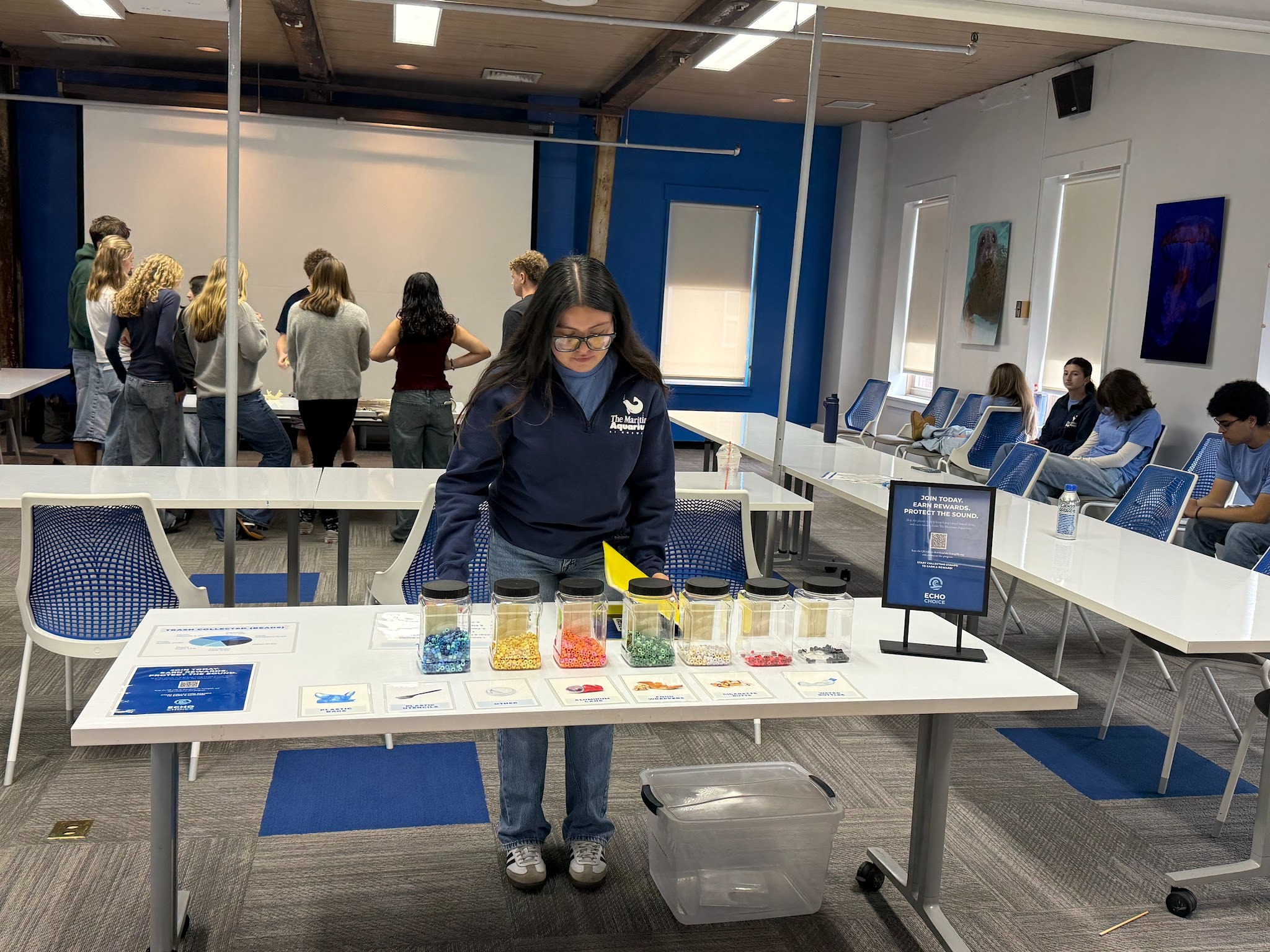
This was one of the first times we got to educate guests using the “Ordering Trash” educational cart I helped create to educate aquarium guests about plastic pollution and marine debris (pictured above). The beads represent the different types of plastic found in Connecticut, and guests can move the cards around to guess which items are found the least and most. Once they put the cards in the order they believe, we turn the jars of beads around and tell them the correct order. (All the data is based on pounds of trash found in CT) The cart was created to be fun for younger guests while still being informative for other guests.
I also participated in local beach clean ups, where I helped remove plastic waste. This gave me the opportunity to see the problem of plastic pollution firsthand, while also doing something to help my community. I was also able to talk about my project to others.
Another part of my project was reaching out to local restaurants in Norwalk and in Stamford. I gave restaurants a list of biodegradable takeout containers they could use instead of the styrofoam and plastic containers. I wanted to show restaurants that there are more sustainable alternatives available. Most restaurants liked the idea but not the cost. Unfortunately making a switch like that is not cheap, so many restaurants were hesitant.
I contacted the Governor’s office and several members of the Connecticut Environment Committee to advocate for HB 5524. I reached out to share my concerns about styrofoam and single-use plastic pollution and explain why reducing these items is important for protecting Connecticut's environment and waterways. By contacting government officials, I was able to use my voice to bring more attention to this issue and learn more about environmental advocacy.
My project allowed me to bring more awareness to plastic pollution and show others how small everyday choices can help the environment. I was able to connect the work that I have been doing at the aquarium these past eight months to my Marine Plastic Ambassador project.
This project taught me that change takes time and won’t happen over night. Even though HB 5524 did not become a law, I learned that advocacy is about educating others, speaking up, and making connections. While working on my project and the Maritime Aquarium project I was able to teach people new things, visit local restaurants and show them how a small change can make a difference. I also had the opportunity to work with teens my age, who share the same passion for protecting marine life and our environment.
Moving forward, I want to continue educating my community about plastic pollution and encourage people to make more sustainable choices. I plan to continue volunteering at The Maritime Aquarium, where I can teach guests about protecting marine life and reducing single-use plastic. I also hope to create a website that shares the work I have done, data about plastic pollution in Connecticut, and ways others can make small changes to help the environment.
Learn more about the EarthEcho Marine Plastics Ambassador program at https://earthecho.org/plastics-ambassadors.