

How Blue Carbon Ecosystems Protect Our Water | National Water Quality Month Part 4 of 4
Throughout August—National Water Quality Month—we've covered water quality testing, plastic pollution, and policies that protect waterways. We wrap up the month with a focus on the piece that connects them all—blue carbon ecosystems responsible for hearty biodiversity as both a result of clean water and a driver of it.
Blue carbon ecosystems, like salt marshes, mangroves, and seagrass beds, serve multiple purposes in creating a healthy aquatic environment. The plants in these ecosystems are capable of improving water quality, strengthening biodiversity, fortifying coastlines against storm damage, and reducing erosion.
Protecting and restoring blue carbon ecosystems can directly impact, improve, and sustain water quality in coastal communities.
Blue carbon—how does it work?
Blue carbon is a term for carbon pulled from the atmosphere that is stored underwater in coastal ecosystems. Blue carbon sources, like mangroves, have the ability to capture and store carbon dioxide from the atmosphere. Carbon is incorporated into the roots, branches, and leaves of the plants, which keeps it from reentering the atmosphere. When the plants die, the stored carbon stays buried in the soil.
Cleaner water
Plants in blue carbon ecosystems and algae can contribute to cleaner water in a variety of ways. Mangrove roots hold sediment in place and absorb runoff nutrients before they trigger harmful algal blooms. Salt marshes buffer wave action, catch sediment, and soak up/slow rainwater to reduce flooding and runoff pollution. Seaweed acts like a sponge, drawing excess nitrogen/phosphorus and even heavy metals out of the water. Blue carbon ecosystems are working nonstop to improve the quality of the water in which they live.
Mangroves are a group of trees and shrubs that live in the coastal intertidal zone. Their root systems process the silt and sediment that gather as tides shift. They also absorb nutrients from runoff that could otherwise fuel harmful algae outbreaks offshore. The mangroves' ability to filter out unwanted chemicals or residues benefits nearby coral reefs and seagrass beds.
Salt marshes are coastal wetlands that are flooded and drained by salt water brought in by the tides. They protect water quality by filtering runoff and breaking down excess nutrients.
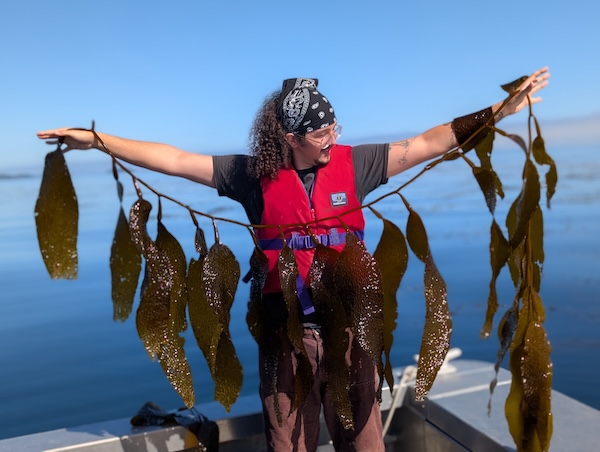
Seaweed, like dulse, bull kelp, ribbon kelp, and sugar kelp, can extract organic and inorganic nutrients from seawater naturally. Water enriched with nutrients, often from runoff or nonpoint source pollution, can fuel harmful algal blooms that deplete oxygen. Seaweed farms take up nitrogen and phosphorus that would otherwise feed these blooms and create low-oxygen dead zones. Seaweed pulls in more CO2 relative to biomass than mangroves, eelgrass, and salt marshes combined. This level of impact means seaweed farms are capable of offsetting local ocean acidification.
Coastal resilience
Many coastal communities rely on blue carbon ecosystems for both the economy and physical safety. They guard against storms by trapping and stabilizing sediment, which keeps coastlines strong and reduces the danger to communities near the shore. According to a 2024 study1, it's estimated that mangroves alone provide roughly $855 billion in flood protection worldwide. Blue carbon ecosystems are a critical piece in preventing flooding, as water is slowed and absorbed by marsh grass, seagrass, and mangroves. By serving as a physical barrier to surging waves, these ecosystems can also shield nearby groundwater sources.

Diverse marine and coastal life
Blue carbon ecosystems such as mangroves and seagrass beds are also nursery grounds for an array of marine and coastal life. Mangrove roots host sponges, snails, worms, anemones, barnacles, and oysters, offering both food and shelter from predators. These areas can support healthy biodiversity as well as provide economic stability to local fishing economies, strengthening food security in coastal areas. The role of blue carbon ecosystems in creating clean, healthy habitats for other aquatic life while boosting water quality and coastal resilience makes them an undeniable contributor to a healthier ocean.
The takeaway
Blue carbon ecosystems as valuable hubs for biodiversity that provide habitat for species ranging from birds and fish to invertebrates, algae, and microbes, and these ecosystems act as a buffer protecting coastal waters from land-based pollutants like nutrient-rich runoff, which can otherwise cause excessive algal growth and low-oxygen dead zones.
Learn about the Blue Carbon Ambassadors—a cohort of youth ages 17–20, from frontline coastal communities historically excluded from ocean science and policy. EarthEcho and our amazing Blue Carbon partners introduce these young leaders to the critical role of blue carbon ecosystems—such as kelp, seagrass, mangroves, and salt marshes—in climate resilience. Through hands-on experiences with coastal restoration and resilience, participants build career skills and access valuable resources in their coastal community that may have been previously out of reach. Read more >
This month we offer four blog posts that explain the role of water quality through the lens of water policy, biodiversity and blue carbon ecosystems, marine plastics and debris, and learning about your local water quality.