

Policy As a Tool for Real Change | National Water Quality Month Part 3 of 4
This blog post was authored by Valeria Suarez Tabares, a 2026 EarthEcho International Marine Plastics Ambassador and three-time alumna of the Water Challenge Ambassador program.
Water connects us all, and ensuring our waterways and marine ecosystems remain healthy requires understanding the decisions that shape what happens beneath the surface. These decisions involve questions of protection, regulation, and prioritization, and they are directly shaped by policy. From regulating pollutants to authorizing grants for marine research development, policies play a key role in ensuring our ecosystems and people remain healthy.
For example, policy actions may set standards for pH levels in water, ban harmful fishing practices, authorize stormwater retention ponds, direct funding to plastic pollution research, and so much more. Although these actions may look very different on the surface, they are united in the fact that they aim to protect our watersheds and ensure that public health standards are met.
One of the first policies I came to learn about through my early experiences in environmental advocacy was the Global Plastics Treaty. The United National Environment Programme proposed this legally binding international agreement to end plastic pollution by addressing the plastic’s life cycle. his policy operates as global environmental governance, though water quality policy can occur on different scales. Global policy requires nations to enforce their own policies to meet international goals, focusing on establishing frameworks and targets. On the other hand, local policies focus on specific legally enforceable limits, permits, and regulations to meet environmental standards.
Both global and local policies are increasingly interdependent and unequivocally indispensable.
Although policy may at times seem like an abstract concept and distant from our day-to-day lives, I have seen firsthand how young people are constantly striving to get involved, exercise their right to democracy, and join these critical conversations in the water advocacy sphere. Young people help leaders understand what matters to their constituents, influence how these representatives vote on certain issues, and demonstrate that democracy is something everyone must participate in by sharing their experiences and opinions directly with officials. From creating policy campaigns and starting petitions to contacting representatives and simply voting when eligible, youth have the ability to help shape the decisions that determine the future of our waterbodies.
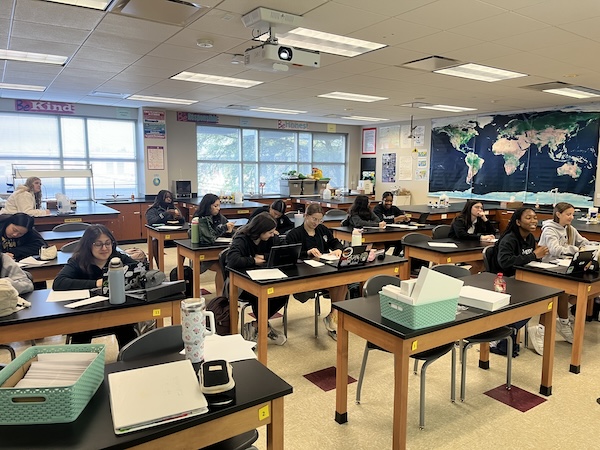
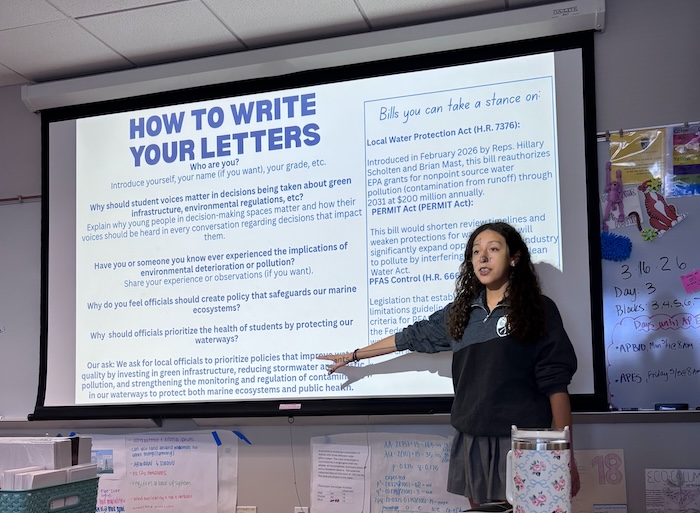
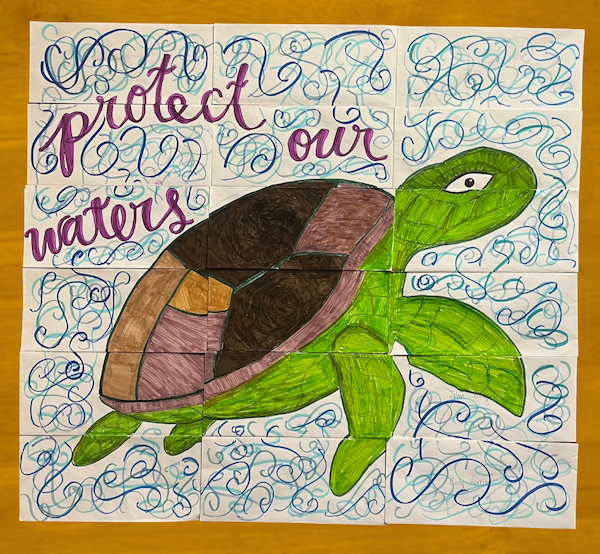
As a Lead Water Challenge Ambassador for EarthEcho International’s 2025–2026 Water Challenge Ambassador Program, I developed a project focused on the intersection between water quality policy and public health. As president of my school’s Climate Action and Technology Club, I partnered with a local youth-led nonprofit to host a letter writing workshop. In this workshop, students ages 14–18 could write directly to Texas state representatives and House committee members about issues relating to green infrastructure, contamination monitoring, and environmental research to protect our watersheds. We wrote 20 letters to Texas representatives, and we made the envelopes containing those letters into a mural at my school with bright colors, fun images, and the message, “Protect Our Waters.”
The mural allowed us to showcase our advocacy efforts and encourage more students in the wider school community to consider the importance of water quality, policy, and public health.
This experience showed me that policy ought to provide clear direction to meet both short and long-term goals that protect the future of our younger generations. Policy efforts are not something that should feel distant and exclusive; they can begin in a classroom or community center. Water quality improvement is achieved through the decisions our policy-makers take, and when young people are constantly communicating what matters to them, they become active participants in shaping the decisions that impact their communities and futures.
This National Water Quality Month, I hope that more youth feel supported and encouraged to join me and raise their voices for what matters to them. Policy change can spark in your community, and that can begin with local advocacy focused on water quality improvement.
Advocacy is manifested in many different ways. It can even look like a colorful turtle drawn on many different envelopes.
As part of National Water Quality Month we offer four blog posts that explain the role of water quality through the lens of water policy, biodiversity and blue carbon ecosystems, marine plastics and debris, and learning about your local water quality.