

Preparing for America Recycles (or Does It?) Day
This blog post was written by Dr. Sam Athey, EarthEcho Marine Plastics Program Manager.
For nearly thirty years on November 15 Americans have celebrated America Recycles Day, an annual reminder of the importance of recycling in order to keep valuable materials out of landfills, the ocean, and the overall environment. According to recent survey data, recycling has become a familiar part of the daily routines of approximately 77% of Americans. We sort our plastics, flatten our cardboard boxes, and toss aluminum cans into the appropriate bins. But how much of what we put in those bins actually gets recycled?
The Reality of Recycling
Recycling is often the first response you’ll get when asked what you can do to help stop the flow of plastic waste into the environment. And while recycling plays an important role in waste management, it is not the stand-alone solution to plastic pollution that many people assume it is.
Unlike materials such as aluminum and glass, which can be recycled repeatedly with relatively little loss in quality, plastics are much more complicated. There are many different types of plastic; each with different chemical compositions, additives, and processing requirements. Not all plastics are accepted by local recycling programs, and even those that are technically recyclable may not be recycled for economic or practical reasons.
In fact, plastic recycling rates in the United States remain surprisingly low and estimated to sit around 5-6%. For example, plastic beverage bottles are a common form of single-use plastic. Americans purchase approximately over 90 billion plastic bottles each year in the US. While these are widely recyclable, only about one third of them are actually recycled.
This means that much of the plastic we carefully place in recycling bins may ultimately end up in landfills, incinerators, or the environment.
So, does that mean we should stop recycling? No! It means we need to understand what recycling can accomplish, where it falls short and how we fill that gap.
What Makes Recycling Work?
For recycling to work effectively across the country, several things need to happen at the same time. Packaging must be designed so it can actually be recycled. People also need to have access to recycle, be educated on what is recyclable and actually participate in recycling consistently. Further, recycling facilities must have the equipment and capacity to sort and process collected materials and manufacturers and other businesses must be willing to buy recycled materials.
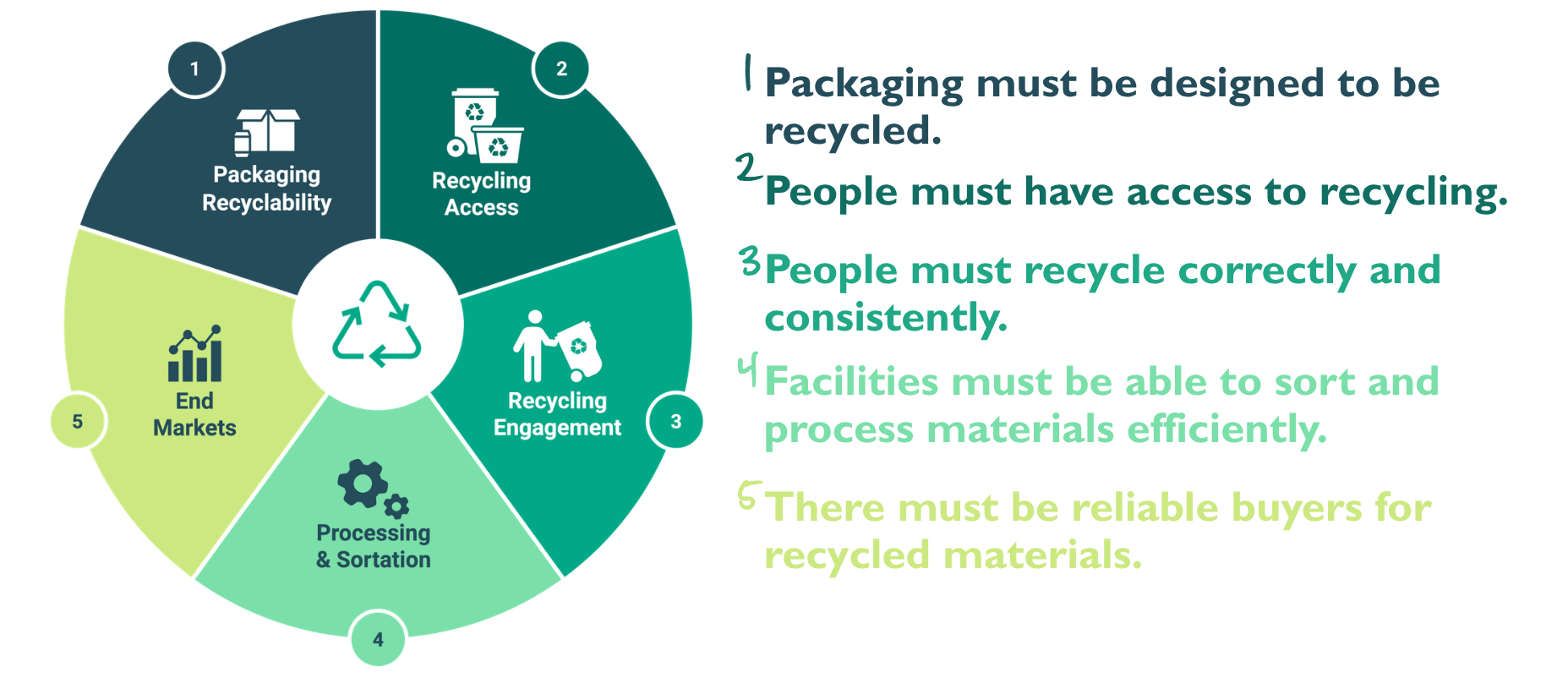
If any one of these pieces is missing, the entire system becomes less effective. In other words, successful recycling is not just about what happens at home. It depends on how products are designed, how communities collect materials, how facilities process them, and whether there is a demand for what gets recycled.
Policy is a key tool in making these pieces work together. Governments can help build a more effective and accountable recycling system by implementing policies that set standards for packaging, expand recycling access, support infrastructure, and create incentives for using recycled materials. And young people have an important role to play in advocating for these changes.
The Role of Youth Leaders
Young people have an important role to play in shaping the future of recycling and reducing plastic pollution. They can raise awareness, engage their communities, and encourage businesses and policymakers to support solutions that address waste at its source.
EarthEcho's Marine Plastics Ambassadors are already putting this into action. Over the past three years, Ambassadors from across the US have sparked conversations with government leaders, industry and community members about stronger packaging policies and extended producer responsibility (EPR), which holds producers accountable for the costs and impacts of managing the packaging they introduce into the market.

The next generation has an opportunity to help make that happen and this America Recycles Day is a great time to start! Whether you are a student, educator, community member, or future policymaker, your voice matters. The question is not simply whether America recycles, but whether we are building a recycling system that actually works.