From Priorities to Protection: Youth Leadership for 30x30 and the High Seas
This blog post was written by Sean Russell, Director of Youth Engagement at EarthEcho International.
Background
The UN Convention on Biological Diversity CBD COP17 meeting marked a critical moment for moving from global biodiversity commitments toward implementation. The BBNJ Agreement (High Seas Treaty) presents an unprecedented opportunity to protect ocean biodiversity in areas beyond national jurisdiction. Its implementation is an important part of delivering meaningful ocean protection at the scale envisioned by Target 3 of the Kunming-Montreal Global Biodiversity Framework to protect at least 30% of the ocean by the year 2030 (30x30).
Across regions, youth leaders playing a critical role building public and political support to advance the BBNJ Agreement and 30x30 targets - supporting national policy processes, advancing marine protected area proposals, conducting biodiversity research, mobilizing communities, and building international coalitions. However, young people are still too often engaged primarily as advocates or invited participants rather than recognized as implementation partners with expertise, constituencies, and solutions. Ahead of the first BBNJ Conference of the Parties (BBNJ COP1), there is an urgent need to establish meaningful pathways for youth participation, including representation within official and civil society delegations, access to capacity-building, opportunities to influence policy, and sustained coordination among youth networks.
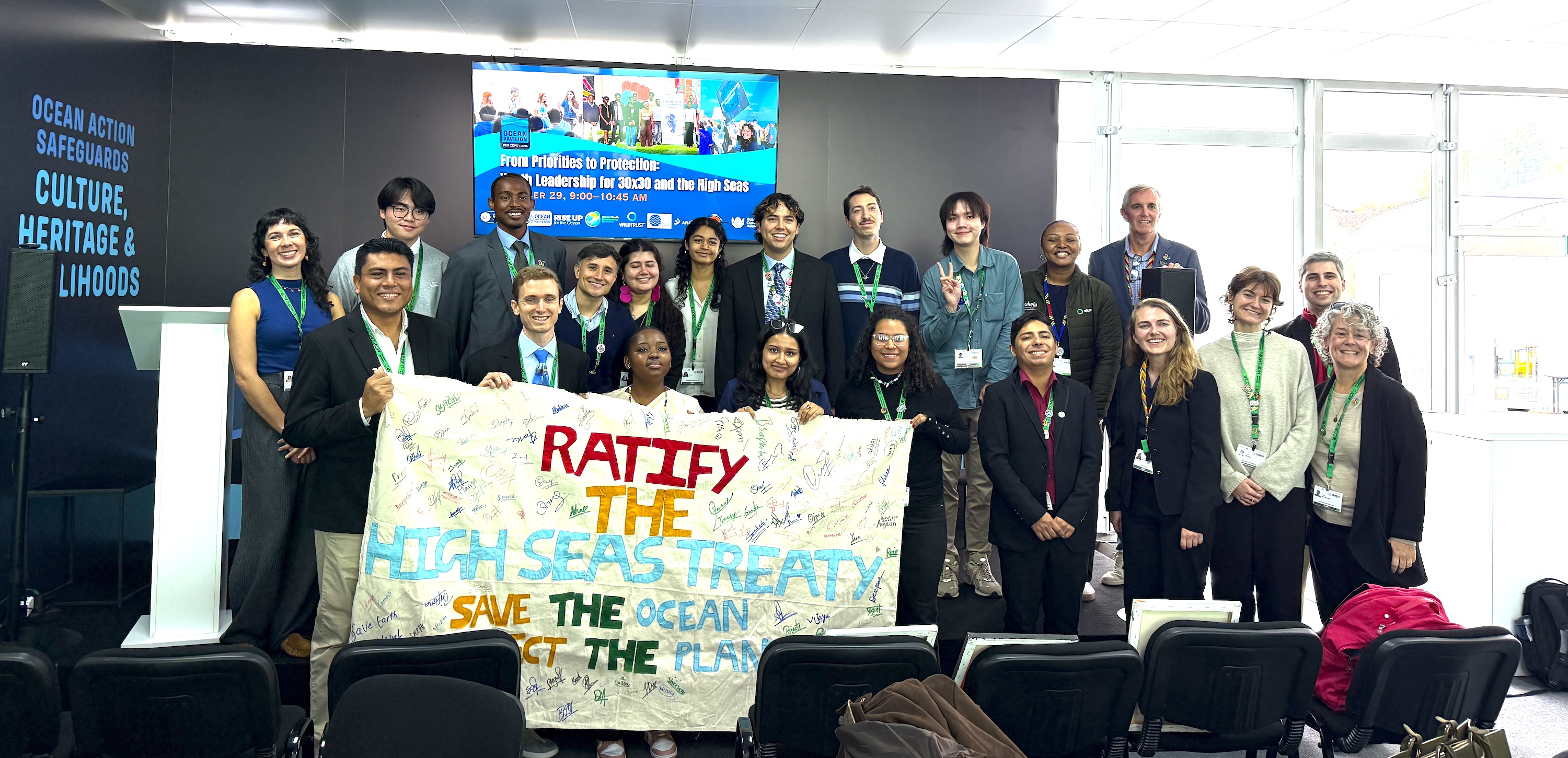
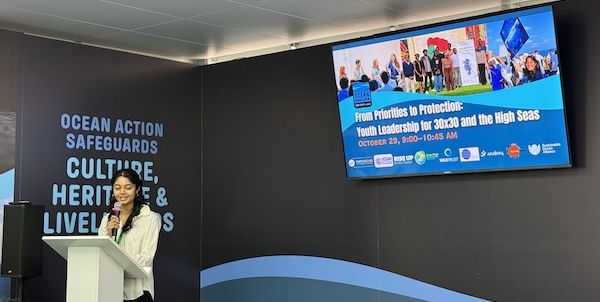
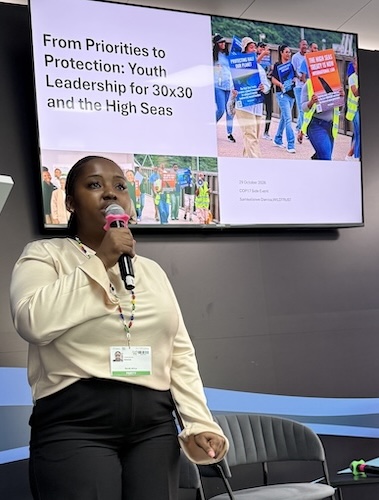
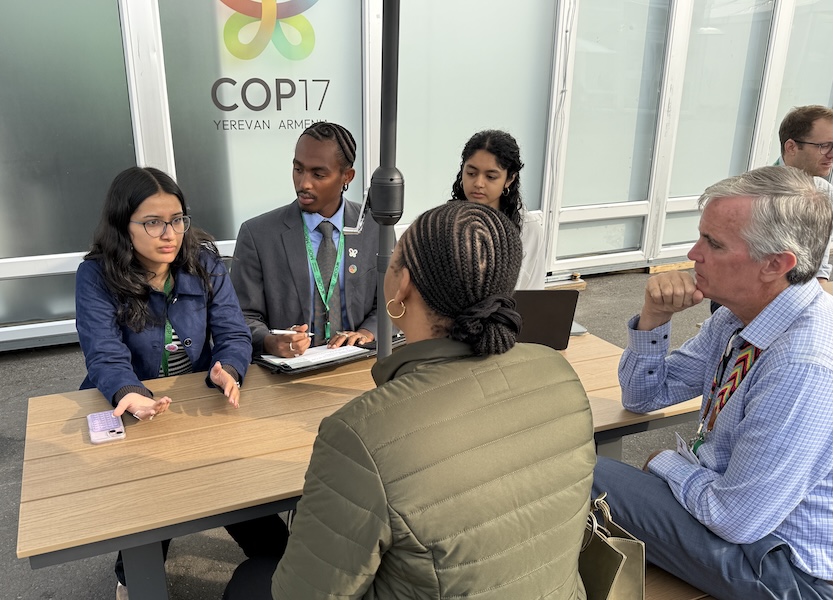
Building on a working dialogue with youth leaders and organizations earlier in the week, the intergenerational COP17 session From Priorities to Protection: Youth Leadership for 30x30 and the High Seas brought together young leaders and representatives from governments, NGOs, academia, and other organizations to explore practical pathways for youth engagement in the implementation of the BBNJ Agreement and preparations for COP1.
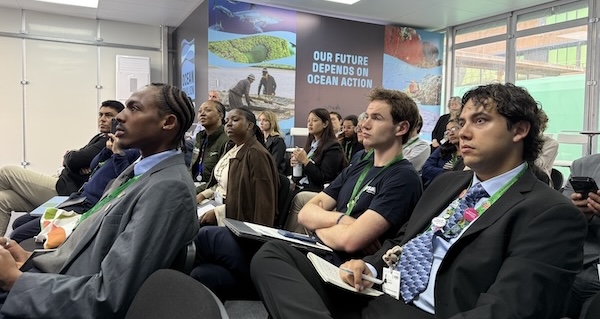
During the session, three facilitated breakout discussions allowed participants to explore key themes emerging from the working dialogue: 1) Strengthening youth preparation and capacity building for participation in COP1 and BBNJ implementation, 2) Advancing youth leadership in national ratification and implementation processes, and 3) Supporting meaningful youth participation in person at BBNJ COP1 in January 2027. The following summary captures key ideas and opportunities raised during these discussions. These emerging themes are intended to inform continued collaboration ahead of BBNJ COP1.
1. Strengthening youth preparation and capacity building for BBNJ implementation
Guiding question: Preparation and capacity-building training are critical to supporting youth engagement in BBNJ implementation and COP1. How can organizations contribute to training and improve youth access to decision-makers?
Participants emphasized that meaningful youth participation requires more than providing access to international meetings. Young people need opportunities to develop the technical knowledge, policy expertise, and practical skills necessary to engage confidently and substantively in complex decision-making spaces.
Several opportunities emerged:
- Making technical information accessible: Translate complex Treaty language, scientific information, and political processes into accessible resources that help young people understand key issues, navigate policy discussions, and engage with technical information.
- Providing tailored preparation and mentorship: Develop targeted training that prepares young people to participate effectively in COP1 processes, including understanding negotiation procedures, navigating political spaces, asking informed questions, and engaging in technical discussions. Mentorship from experienced negotiators, NGO representatives, government delegations, scientists, policy experts, and/or other practitioners can help youth build confidence and develop their expertise. There are also opportunities for peer to peer mentorship between young people who are new to these spaces and early career ocean professionals who have previously engaged in similar international policy forums.
- Creating meaningful opportunities for engagement: Move beyond tokenistic representation by strategically integrating young people into organizational and governmental delegations at COP1 and in future BBNJ processes, including opportunities to work alongside government officials, technical experts, and decision-makers. Youth should be supported in bringing their own perspectives, knowledge, and areas of expertise into these spaces.
- Strengthening coordination among youth delegates: Building on the work coordinated by EarthEcho International and the High Seas Alliance, and the discussions at PrepCom 3 and CBD COP17, facilitate greater communication, collaboration, and preparation among young people participating in COP1 by convening youth delegates for ongoing collaboration.
- Mobilizing contributions across sectors: Participants highlighted that responsibility for preparing young people should be shared across organizations attending COP1. NGOs, governments, academia, and financial institutions all have potential roles to play, whether through technical training, mentorship, financial support, or access to decision-making spaces.
The discussion highlighted the importance of moving from general capacity-building opportunities toward more targeted preparation that equips young people to contribute meaningfully to specific BBNJ issues and implementation priorities.

2. Advancing youth leadership in national ratification and implementation processes
Guiding question: Young people should play a leadership role in their home countries in BBNJ ratification and implementation dialogues in the lead-up to COP1. How can organizations identify opportunities and support youth access to key decision-makers?
The discussion centered on how youth can play leadership roles in national BBNJ ratification and implementation processes ahead of COP1, and how NGOs can help young people access decision-makers. With BBNJ COP1 approaching, youth engagement must begin at the national level and extend beyond participation at international meetings.
Participants emphasized the importance of genuine partnerships between youth and organizations already working on BBNJ. Youth should proactively engage these organizations, while organizations should co-design initiatives with young people, provide access to experts and create pathways to government officials and national negotiators.
In countries that have not yet ratified or acceded to the BBNJ Agreement, youth can help explain why participation matters to communities and national interests. Young people from these countries should also remain connected to COP1 discussions, even if their governments are not yet Parties.
Key opportunities identified included:
- Building BBNJ literacy: Organize formal workshops, webinars, university events, and school outreach explaining the Agreement, its relevance to communities, and its four principal areas: marine genetic resources and benefit-sharing; area-based management tools, including marine protected areas; environmental impact assessments; and capacity-building and marine technology transfer. Training should also address the Clearing-House Mechanism, funding, implementation, compliance, and related ocean governance issues.
- Making information accessible: Translate treaty language into clear, multilingual, and community-relevant materials. Ocean literacy initiatives and intergenerational dialogues can help connect complex international negotiations with public understanding and local priorities.
- Developing youth as resource experts: Build young people's legal, scientific, and policy capacity so they can contribute research, briefings, translations, technical expertise, and community perspectives to government preparations and national policy processes.
- Mapping national pathways: Identify the ministries, BBNJ focal points, negotiators, and other officials responsible for ratification and implementation. Youth networks should understand national policy processes and timelines so they can identify when and where engagement is possible.
- Connecting institutions and expertise: Build national coalitions among youth organizations, BBNJ-focused organizations, universities, researchers, schools, and technical experts. Academia and research institutions can contribute training and expertise while helping address legal, scientific, and technical capacity gaps.
- Making the High Seas tangible: Connect the BBNJ Agreement to issues that communities experience directly, including fisheries, food security, climate regulation, biodiversity, livelihoods, and the health of national and coastal waters.
Participants also highlighted the importance of maintaining opportunities for young people in countries that have not yet ratified or acceded to the Agreement to remain informed and engaged in COP1 discussions, even when their governments are not yet Parties to the Agreement.
3. Supporting meaningful youth participation in person at BBNJ COP1
Guiding question: Young people should play a leadership role in BBNJ ratification and implementation in person at COP1. How can organizations provide platforms and increase access for youth at COP1?
Participants discussed the need to establish more formal and meaningful pathways for young people to participate in COP1, emphasizing that youth representation should be accompanied by the resources, technical preparation, and access necessary to influence discussions.
Several potential approaches emerged:
- Providing financial and capacity-building support: Ensure that youth participation is supported through financial resources, accreditation to COP1, technical training, and preparation ahead of COP1.
- Expanding youth access to delegations: Secure opportunities to include young people in both government and NGO delegations, including dedicated youth participation opportunities or seats in these delegations, providing multiple pathways for youth participation. Participants noted that the opportunities and access available to youth can differ significantly depending on whether they participate as part of a government delegation or through an NGO, highlighting the importance of exploring pathways to strengthen youth access to government delegations.
- Creating opportunities for youth contributions within technical processes: Move beyond general youth representation by identifying opportunities for young people to participate in technical bodies, panels, and issue-specific discussions. Participants emphasized the value of recognizing young people as contributors with relevant scientific, policy, and technical expertise.
- Strengthening youth-led advocacy and public engagement: Leverage young people's digital communications skills, social media networks, and community organizing experience to increase public awareness and encourage decision-makers and organizations to create meaningful opportunities for youth participation.
- Addressing technical capacity gaps: Identify areas of BBNJ implementation where additional youth training and expertise are particularly needed, including environmental impact assessments (EIAs), and create opportunities for young people to develop specialized knowledge in these areas.
Across these discussions, participants emphasized that meaningful participation requires both access and influence: young people should have opportunities to attend COP1 and contribute their knowledge, expertise, and perspectives to the decisions and processes shaping implementation.
Moving forward
The discussions at CBD COP17 build on themes emerging from conversations convened by EarthEcho International and the High Seas Alliance engaging a network of youth-led and youth-serving organizations over the past year, and provide additional foundation for continued collaboration among youth leaders, organizations, governments, and other partners in the lead-up to BBNJ COP1. They also highlight opportunities to connect youth-led implementation of 30x30 with emerging efforts to strengthen governance and protection of marine biodiversity in areas beyond national jurisdiction.
Building on these dialogues, we look forward to collaborating with this growing community of youth-led and youth-serving organizations, as well as NGO partners and government representatives to advance commitments made during this session including to:
- Compile and share existing BBNJ training resources and capacity building opportunities for young people participating in BBNJ implementation at COP1 and beyond.
- Provide resources to support youth engagement in COP1, including travel funding support and accreditation access, as well as ongoing training opportunities.
- Identify tangible opportunities for young people to contribute to BBNJ implementation discussions in the lead up to, during, and following COP1 in their home countries.
- Create shared communication channels for young people attending BBNJ COP1 to coordinate in advance, during, and beyond the meeting.
- Explore opportunities for youth engagement in COP1 through government and NGO delegations.
- Continue to convene youth-led and youth serving organizations in the lead up to, during, and following COP1 to align on shared priorities for advancing robust BBNJ agreement implementation and youth engagement in these processes.

A special thank you to the Sustainable Ocean Alliance for co-hosting this session and our organizational partners The Global Youth Biodiversity Network, High Seas Alliance, International Institute ARAYARA, Ocean Youth Constituency, OSG Youth Network, RISE UP for the Ocean, and WILDTRUST for their engagement in and support of these dialogues.
We are also grateful to The Ocean Pavilion at COP17 for providing the platform to convene this event and to the young people, NGO partners, and government representatives who joined us for this discussion.